
Get trending papers in your email inbox once a day!
Get trending papers in your email inbox!
Subscribe


Reloc3r: Large-Scale Training of Relative Camera Pose Regression for Generalizable, Fast, and Accurate Visual Localization
Visual localization aims to determine the camera pose of a query image relative to a database of posed images. In recent years, deep neural networks that directly regress camera poses have gained popularity due to their fast inference capabilities. However, existing methods struggle to either generalize well to new scenes or provide accurate camera pose estimates. To address these issues, we present Reloc3r, a simple yet effective visual localization framework. It consists of an elegantly designed relative pose regression network, and a minimalist motion averaging module for absolute pose estimation. Trained on approximately 8 million posed image pairs, Reloc3r achieves surprisingly good performance and generalization ability. We conduct extensive experiments on 6 public datasets, consistently demonstrating the effectiveness and efficiency of the proposed method. It provides high-quality camera pose estimates in real time and generalizes to novel scenes. Code, weights, and data at: https://github.com/ffrivera0/reloc3r.

LivePose: Online 3D Reconstruction from Monocular Video with Dynamic Camera Poses
Dense 3D reconstruction from RGB images traditionally assumes static camera pose estimates. This assumption has endured, even as recent works have increasingly focused on real-time methods for mobile devices. However, the assumption of a fixed pose for each image does not hold for online execution: poses from real-time SLAM are dynamic and may be updated following events such as bundle adjustment and loop closure. This has been addressed in the RGB-D setting, by de-integrating past views and re-integrating them with updated poses, but it remains largely untreated in the RGB-only setting. We formalize this problem to define the new task of dense online reconstruction from dynamically-posed images. To support further research, we introduce a dataset called LivePose containing the dynamic poses from a SLAM system running on ScanNet. We select three recent reconstruction systems and apply a framework based on de-integration to adapt each one to the dynamic-pose setting. In addition, we propose a novel, non-linear de-integration module that learns to remove stale scene content. We show that responding to pose updates is critical for high-quality reconstruction, and that our de-integration framework is an effective solution.
Symmetry and Uncertainty-Aware Object SLAM for 6DoF Object Pose Estimation
We propose a keypoint-based object-level SLAM framework that can provide globally consistent 6DoF pose estimates for symmetric and asymmetric objects alike. To the best of our knowledge, our system is among the first to utilize the camera pose information from SLAM to provide prior knowledge for tracking keypoints on symmetric objects -- ensuring that new measurements are consistent with the current 3D scene. Moreover, our semantic keypoint network is trained to predict the Gaussian covariance for the keypoints that captures the true error of the prediction, and thus is not only useful as a weight for the residuals in the system's optimization problems, but also as a means to detect harmful statistical outliers without choosing a manual threshold. Experiments show that our method provides competitive performance to the state of the art in 6DoF object pose estimation, and at a real-time speed. Our code, pre-trained models, and keypoint labels are available https://github.com/rpng/suo_slam.

Finding 3D Positions of Distant Objects from Noisy Camera Movement and Semantic Segmentation Sequences
3D object localisation based on a sequence of camera measurements is essential for safety-critical surveillance tasks, such as drone-based wildfire monitoring. Localisation of objects detected with a camera can typically be solved with dense depth estimation or 3D scene reconstruction. However, in the context of distant objects or tasks limited by the amount of available computational resources, neither solution is feasible. In this paper, we show that the task can be solved using particle filters for both single and multiple target scenarios. The method was studied using a 3D simulation and a drone-based image segmentation sequence with global navigation satellite system (GNSS)-based camera pose estimates. The results showed that a particle filter can be used to solve practical localisation tasks based on camera poses and image segments in these situations where other solutions fail. The particle filter is independent of the detection method, making it flexible for new tasks. The study also demonstrates that drone-based wildfire monitoring can be conducted using the proposed method paired with a pre-existing image segmentation model.

Lost & Found: Tracking Changes from Egocentric Observations in 3D Dynamic Scene Graphs
Recent approaches have successfully focused on the segmentation of static reconstructions, thereby equipping downstream applications with semantic 3D understanding. However, the world in which we live is dynamic, characterized by numerous interactions between the environment and humans or robotic agents. Static semantic maps are unable to capture this information, and the naive solution of rescanning the environment after every change is both costly and ineffective in tracking e.g. objects being stored away in drawers. With Lost & Found we present an approach that addresses this limitation. Based solely on egocentric recordings with corresponding hand position and camera pose estimates, we are able to track the 6DoF poses of the moving object within the detected interaction interval. These changes are applied online to a transformable scene graph that captures object-level relations. Compared to state-of-the-art object pose trackers, our approach is more reliable in handling the challenging egocentric viewpoint and the lack of depth information. It outperforms the second-best approach by 34% and 56% for translational and orientational error, respectively, and produces visibly smoother 6DoF object trajectories. In addition, we illustrate how the acquired interaction information in the dynamic scene graph can be employed in the context of robotic applications that would otherwise be unfeasible: We show how our method allows to command a mobile manipulator through teach & repeat, and how information about prior interaction allows a mobile manipulator to retrieve an object hidden in a drawer. Code, videos and corresponding data are accessible at https://behretj.github.io/LostAndFound.

Image as an IMU: Estimating Camera Motion from a Single Motion-Blurred Image
In many robotics and VR/AR applications, fast camera motions cause a high level of motion blur, causing existing camera pose estimation methods to fail. In this work, we propose a novel framework that leverages motion blur as a rich cue for motion estimation rather than treating it as an unwanted artifact. Our approach works by predicting a dense motion flow field and a monocular depth map directly from a single motion-blurred image. We then recover the instantaneous camera velocity by solving a linear least squares problem under the small motion assumption. In essence, our method produces an IMU-like measurement that robustly captures fast and aggressive camera movements. To train our model, we construct a large-scale dataset with realistic synthetic motion blur derived from ScanNet++v2 and further refine our model by training end-to-end on real data using our fully differentiable pipeline. Extensive evaluations on real-world benchmarks demonstrate that our method achieves state-of-the-art angular and translational velocity estimates, outperforming current methods like MASt3R and COLMAP.


SparsePose: Sparse-View Camera Pose Regression and Refinement
Camera pose estimation is a key step in standard 3D reconstruction pipelines that operate on a dense set of images of a single object or scene. However, methods for pose estimation often fail when only a few images are available because they rely on the ability to robustly identify and match visual features between image pairs. While these methods can work robustly with dense camera views, capturing a large set of images can be time-consuming or impractical. We propose SparsePose for recovering accurate camera poses given a sparse set of wide-baseline images (fewer than 10). The method learns to regress initial camera poses and then iteratively refine them after training on a large-scale dataset of objects (Co3D: Common Objects in 3D). SparsePose significantly outperforms conventional and learning-based baselines in recovering accurate camera rotations and translations. We also demonstrate our pipeline for high-fidelity 3D reconstruction using only 5-9 images of an object.
MonoNeRF: Learning Generalizable NeRFs from Monocular Videos without Camera Pose
We propose a generalizable neural radiance fields - MonoNeRF, that can be trained on large-scale monocular videos of moving in static scenes without any ground-truth annotations of depth and camera poses. MonoNeRF follows an Autoencoder-based architecture, where the encoder estimates the monocular depth and the camera pose, and the decoder constructs a Multiplane NeRF representation based on the depth encoder feature, and renders the input frames with the estimated camera. The learning is supervised by the reconstruction error. Once the model is learned, it can be applied to multiple applications including depth estimation, camera pose estimation, and single-image novel view synthesis. More qualitative results are available at: https://oasisyang.github.io/mononerf .
POPE: 6-DoF Promptable Pose Estimation of Any Object, in Any Scene, with One Reference
Despite the significant progress in six degrees-of-freedom (6DoF) object pose estimation, existing methods have limited applicability in real-world scenarios involving embodied agents and downstream 3D vision tasks. These limitations mainly come from the necessity of 3D models, closed-category detection, and a large number of densely annotated support views. To mitigate this issue, we propose a general paradigm for object pose estimation, called Promptable Object Pose Estimation (POPE). The proposed approach POPE enables zero-shot 6DoF object pose estimation for any target object in any scene, while only a single reference is adopted as the support view. To achieve this, POPE leverages the power of the pre-trained large-scale 2D foundation model, employs a framework with hierarchical feature representation and 3D geometry principles. Moreover, it estimates the relative camera pose between object prompts and the target object in new views, enabling both two-view and multi-view 6DoF pose estimation tasks. Comprehensive experimental results demonstrate that POPE exhibits unrivaled robust performance in zero-shot settings, by achieving a significant reduction in the averaged Median Pose Error by 52.38% and 50.47% on the LINEMOD and OnePose datasets, respectively. We also conduct more challenging testings in causally captured images (see Figure 1), which further demonstrates the robustness of POPE. Project page can be found with https://paulpanwang.github.io/POPE/.



Learning Temporal 3D Human Pose Estimation with Pseudo-Labels
We present a simple, yet effective, approach for self-supervised 3D human pose estimation. Unlike the prior work, we explore the temporal information next to the multi-view self-supervision. During training, we rely on triangulating 2D body pose estimates of a multiple-view camera system. A temporal convolutional neural network is trained with the generated 3D ground-truth and the geometric multi-view consistency loss, imposing geometrical constraints on the predicted 3D body skeleton. During inference, our model receives a sequence of 2D body pose estimates from a single-view to predict the 3D body pose for each of them. An extensive evaluation shows that our method achieves state-of-the-art performance in the Human3.6M and MPI-INF-3DHP benchmarks. Our code and models are publicly available at https://github.com/vru2020/TM_HPE/.
FaVoR: Features via Voxel Rendering for Camera Relocalization
Camera relocalization methods range from dense image alignment to direct camera pose regression from a query image. Among these, sparse feature matching stands out as an efficient, versatile, and generally lightweight approach with numerous applications. However, feature-based methods often struggle with significant viewpoint and appearance changes, leading to matching failures and inaccurate pose estimates. To overcome this limitation, we propose a novel approach that leverages a globally sparse yet locally dense 3D representation of 2D features. By tracking and triangulating landmarks over a sequence of frames, we construct a sparse voxel map optimized to render image patch descriptors observed during tracking. Given an initial pose estimate, we first synthesize descriptors from the voxels using volumetric rendering and then perform feature matching to estimate the camera pose. This methodology enables the generation of descriptors for unseen views, enhancing robustness to view changes. We extensively evaluate our method on the 7-Scenes and Cambridge Landmarks datasets. Our results show that our method significantly outperforms existing state-of-the-art feature representation techniques in indoor environments, achieving up to a 39% improvement in median translation error. Additionally, our approach yields comparable results to other methods for outdoor scenarios while maintaining lower memory and computational costs.
SAMURAI: Shape And Material from Unconstrained Real-world Arbitrary Image collections
Inverse rendering of an object under entirely unknown capture conditions is a fundamental challenge in computer vision and graphics. Neural approaches such as NeRF have achieved photorealistic results on novel view synthesis, but they require known camera poses. Solving this problem with unknown camera poses is highly challenging as it requires joint optimization over shape, radiance, and pose. This problem is exacerbated when the input images are captured in the wild with varying backgrounds and illuminations. Standard pose estimation techniques fail in such image collections in the wild due to very few estimated correspondences across images. Furthermore, NeRF cannot relight a scene under any illumination, as it operates on radiance (the product of reflectance and illumination). We propose a joint optimization framework to estimate the shape, BRDF, and per-image camera pose and illumination. Our method works on in-the-wild online image collections of an object and produces relightable 3D assets for several use-cases such as AR/VR. To our knowledge, our method is the first to tackle this severely unconstrained task with minimal user interaction. Project page: https://markboss.me/publication/2022-samurai/ Video: https://youtu.be/LlYuGDjXp-8

R3D3: Dense 3D Reconstruction of Dynamic Scenes from Multiple Cameras
Dense 3D reconstruction and ego-motion estimation are key challenges in autonomous driving and robotics. Compared to the complex, multi-modal systems deployed today, multi-camera systems provide a simpler, low-cost alternative. However, camera-based 3D reconstruction of complex dynamic scenes has proven extremely difficult, as existing solutions often produce incomplete or incoherent results. We propose R3D3, a multi-camera system for dense 3D reconstruction and ego-motion estimation. Our approach iterates between geometric estimation that exploits spatial-temporal information from multiple cameras, and monocular depth refinement. We integrate multi-camera feature correlation and dense bundle adjustment operators that yield robust geometric depth and pose estimates. To improve reconstruction where geometric depth is unreliable, e.g. for moving objects or low-textured regions, we introduce learnable scene priors via a depth refinement network. We show that this design enables a dense, consistent 3D reconstruction of challenging, dynamic outdoor environments. Consequently, we achieve state-of-the-art dense depth prediction on the DDAD and NuScenes benchmarks.

SG-NeRF: Neural Surface Reconstruction with Scene Graph Optimization
3D surface reconstruction from images is essential for numerous applications. Recently, Neural Radiance Fields (NeRFs) have emerged as a promising framework for 3D modeling. However, NeRFs require accurate camera poses as input, and existing methods struggle to handle significantly noisy pose estimates (i.e., outliers), which are commonly encountered in real-world scenarios. To tackle this challenge, we present a novel approach that optimizes radiance fields with scene graphs to mitigate the influence of outlier poses. Our method incorporates an adaptive inlier-outlier confidence estimation scheme based on scene graphs, emphasizing images of high compatibility with the neighborhood and consistency in the rendering quality. We also introduce an effective intersection-over-union (IoU) loss to optimize the camera pose and surface geometry, together with a coarse-to-fine strategy to facilitate the training. Furthermore, we propose a new dataset containing typical outlier poses for a detailed evaluation. Experimental results on various datasets consistently demonstrate the effectiveness and superiority of our method over existing approaches, showcasing its robustness in handling outliers and producing high-quality 3D reconstructions. Our code and data are available at: https://github.com/Iris-cyy/SG-NeRF.
MonST3R: A Simple Approach for Estimating Geometry in the Presence of Motion
Estimating geometry from dynamic scenes, where objects move and deform over time, remains a core challenge in computer vision. Current approaches often rely on multi-stage pipelines or global optimizations that decompose the problem into subtasks, like depth and flow, leading to complex systems prone to errors. In this paper, we present Motion DUSt3R (MonST3R), a novel geometry-first approach that directly estimates per-timestep geometry from dynamic scenes. Our key insight is that by simply estimating a pointmap for each timestep, we can effectively adapt DUST3R's representation, previously only used for static scenes, to dynamic scenes. However, this approach presents a significant challenge: the scarcity of suitable training data, namely dynamic, posed videos with depth labels. Despite this, we show that by posing the problem as a fine-tuning task, identifying several suitable datasets, and strategically training the model on this limited data, we can surprisingly enable the model to handle dynamics, even without an explicit motion representation. Based on this, we introduce new optimizations for several downstream video-specific tasks and demonstrate strong performance on video depth and camera pose estimation, outperforming prior work in terms of robustness and efficiency. Moreover, MonST3R shows promising results for primarily feed-forward 4D reconstruction.





ViVid-1-to-3: Novel View Synthesis with Video Diffusion Models
Generating novel views of an object from a single image is a challenging task. It requires an understanding of the underlying 3D structure of the object from an image and rendering high-quality, spatially consistent new views. While recent methods for view synthesis based on diffusion have shown great progress, achieving consistency among various view estimates and at the same time abiding by the desired camera pose remains a critical problem yet to be solved. In this work, we demonstrate a strikingly simple method, where we utilize a pre-trained video diffusion model to solve this problem. Our key idea is that synthesizing a novel view could be reformulated as synthesizing a video of a camera going around the object of interest -- a scanning video -- which then allows us to leverage the powerful priors that a video diffusion model would have learned. Thus, to perform novel-view synthesis, we create a smooth camera trajectory to the target view that we wish to render, and denoise using both a view-conditioned diffusion model and a video diffusion model. By doing so, we obtain a highly consistent novel view synthesis, outperforming the state of the art.

Loc-NeRF: Monte Carlo Localization using Neural Radiance Fields
We present Loc-NeRF, a real-time vision-based robot localization approach that combines Monte Carlo localization and Neural Radiance Fields (NeRF). Our system uses a pre-trained NeRF model as the map of an environment and can localize itself in real-time using an RGB camera as the only exteroceptive sensor onboard the robot. While neural radiance fields have seen significant applications for visual rendering in computer vision and graphics, they have found limited use in robotics. Existing approaches for NeRF-based localization require both a good initial pose guess and significant computation, making them impractical for real-time robotics applications. By using Monte Carlo localization as a workhorse to estimate poses using a NeRF map model, Loc-NeRF is able to perform localization faster than the state of the art and without relying on an initial pose estimate. In addition to testing on synthetic data, we also run our system using real data collected by a Clearpath Jackal UGV and demonstrate for the first time the ability to perform real-time global localization with neural radiance fields. We make our code publicly available at https://github.com/MIT-SPARK/Loc-NeRF.

Adversarial Exploitation of Data Diversity Improves Visual Localization
Visual localization, which estimates a camera's pose within a known scene, is a fundamental capability for autonomous systems. While absolute pose regression (APR) methods have shown promise for efficient inference, they often struggle with generalization. Recent approaches attempt to address this through data augmentation with varied viewpoints, yet they overlook a critical factor: appearance diversity. In this work, we identify appearance variation as the key to robust localization. Specifically, we first lift real 2D images into 3D Gaussian Splats with varying appearance and deblurring ability, enabling the synthesis of diverse training data that varies not just in poses but also in environmental conditions such as lighting and weather. To fully unleash the potential of the appearance-diverse data, we build a two-branch joint training pipeline with an adversarial discriminator to bridge the syn-to-real gap. Extensive experiments demonstrate that our approach significantly outperforms state-of-the-art methods, reducing translation and rotation errors by 50\% and 41\% on indoor datasets, and 38\% and 44\% on outdoor datasets. Most notably, our method shows remarkable robustness in dynamic driving scenarios under varying weather conditions and in day-to-night scenarios, where previous APR methods fail. Project Page: https://ai4ce.github.io/RAP/
Self-Supervised Learning of 3D Human Pose using Multi-view Geometry
Training accurate 3D human pose estimators requires large amount of 3D ground-truth data which is costly to collect. Various weakly or self supervised pose estimation methods have been proposed due to lack of 3D data. Nevertheless, these methods, in addition to 2D ground-truth poses, require either additional supervision in various forms (e.g. unpaired 3D ground truth data, a small subset of labels) or the camera parameters in multiview settings. To address these problems, we present EpipolarPose, a self-supervised learning method for 3D human pose estimation, which does not need any 3D ground-truth data or camera extrinsics. During training, EpipolarPose estimates 2D poses from multi-view images, and then, utilizes epipolar geometry to obtain a 3D pose and camera geometry which are subsequently used to train a 3D pose estimator. We demonstrate the effectiveness of our approach on standard benchmark datasets i.e. Human3.6M and MPI-INF-3DHP where we set the new state-of-the-art among weakly/self-supervised methods. Furthermore, we propose a new performance measure Pose Structure Score (PSS) which is a scale invariant, structure aware measure to evaluate the structural plausibility of a pose with respect to its ground truth. Code and pretrained models are available at https://github.com/mkocabas/EpipolarPose
ViPE: Video Pose Engine for 3D Geometric Perception
Accurate 3D geometric perception is an important prerequisite for a wide range of spatial AI systems. While state-of-the-art methods depend on large-scale training data, acquiring consistent and precise 3D annotations from in-the-wild videos remains a key challenge. In this work, we introduce ViPE, a handy and versatile video processing engine designed to bridge this gap. ViPE efficiently estimates camera intrinsics, camera motion, and dense, near-metric depth maps from unconstrained raw videos. It is robust to diverse scenarios, including dynamic selfie videos, cinematic shots, or dashcams, and supports various camera models such as pinhole, wide-angle, and 360{\deg} panoramas. We have benchmarked ViPE on multiple benchmarks. Notably, it outperforms existing uncalibrated pose estimation baselines by 18%/50% on TUM/KITTI sequences, and runs at 3-5FPS on a single GPU for standard input resolutions. We use ViPE to annotate a large-scale collection of videos. This collection includes around 100K real-world internet videos, 1M high-quality AI-generated videos, and 2K panoramic videos, totaling approximately 96M frames -- all annotated with accurate camera poses and dense depth maps. We open-source ViPE and the annotated dataset with the hope of accelerating the development of spatial AI systems.
Real-time Holistic Robot Pose Estimation with Unknown States
Estimating robot pose from RGB images is a crucial problem in computer vision and robotics. While previous methods have achieved promising performance, most of them presume full knowledge of robot internal states, e.g. ground-truth robot joint angles. However, this assumption is not always valid in practical situations. In real-world applications such as multi-robot collaboration or human-robot interaction, the robot joint states might not be shared or could be unreliable. On the other hand, existing approaches that estimate robot pose without joint state priors suffer from heavy computation burdens and thus cannot support real-time applications. This work introduces an efficient framework for real-time robot pose estimation from RGB images without requiring known robot states. Our method estimates camera-to-robot rotation, robot state parameters, keypoint locations, and root depth, employing a neural network module for each task to facilitate learning and sim-to-real transfer. Notably, it achieves inference in a single feed-forward pass without iterative optimization. Our approach offers a 12-time speed increase with state-of-the-art accuracy, enabling real-time holistic robot pose estimation for the first time. Code and models are available at https://github.com/Oliverbansk/Holistic-Robot-Pose-Estimation.

LU-NeRF: Scene and Pose Estimation by Synchronizing Local Unposed NeRFs
A critical obstacle preventing NeRF models from being deployed broadly in the wild is their reliance on accurate camera poses. Consequently, there is growing interest in extending NeRF models to jointly optimize camera poses and scene representation, which offers an alternative to off-the-shelf SfM pipelines which have well-understood failure modes. Existing approaches for unposed NeRF operate under limited assumptions, such as a prior pose distribution or coarse pose initialization, making them less effective in a general setting. In this work, we propose a novel approach, LU-NeRF, that jointly estimates camera poses and neural radiance fields with relaxed assumptions on pose configuration. Our approach operates in a local-to-global manner, where we first optimize over local subsets of the data, dubbed mini-scenes. LU-NeRF estimates local pose and geometry for this challenging few-shot task. The mini-scene poses are brought into a global reference frame through a robust pose synchronization step, where a final global optimization of pose and scene can be performed. We show our LU-NeRF pipeline outperforms prior attempts at unposed NeRF without making restrictive assumptions on the pose prior. This allows us to operate in the general SE(3) pose setting, unlike the baselines. Our results also indicate our model can be complementary to feature-based SfM pipelines as it compares favorably to COLMAP on low-texture and low-resolution images.


IMP: Iterative Matching and Pose Estimation with Adaptive Pooling
Previous methods solve feature matching and pose estimation using a two-stage process by first finding matches and then estimating the pose. As they ignore the geometric relationships between the two tasks, they focus on either improving the quality of matches or filtering potential outliers, leading to limited efficiency or accuracy. In contrast, we propose an iterative matching and pose estimation framework (IMP) leveraging the geometric connections between the two tasks: a few good matches are enough for a roughly accurate pose estimation; a roughly accurate pose can be used to guide the matching by providing geometric constraints. To this end, we implement a geometry-aware recurrent attention-based module which jointly outputs sparse matches and camera poses. Specifically, for each iteration, we first implicitly embed geometric information into the module via a pose-consistency loss, allowing it to predict geometry-aware matches progressively. Second, we introduce an efficient IMP, called EIMP, to dynamically discard keypoints without potential matches, avoiding redundant updating and significantly reducing the quadratic time complexity of attention computation in transformers. Experiments on YFCC100m, Scannet, and Aachen Day-Night datasets demonstrate that the proposed method outperforms previous approaches in terms of accuracy and efficiency.
Camera calibration for the surround-view system: a benchmark and dataset
Surround-view system (SVS) is widely used in the Advanced Driver Assistance System (ADAS). SVS uses four fisheye lenses to monitor real-time scenes around the vehicle. However, accurate intrinsic and extrinsic parameter estimation is required for the proper functioning of the system. At present, the intrinsic calibration can be pipeline by utilizing checkerboard algorithm, while extrinsic calibration is still immature. Therefore, we proposed a specific calibration pipeline to estimate extrinsic parameters robustly. This scheme takes a driving sequence of four cameras as input. It firstly utilizes lane line to roughly estimate each camera pose. Considering the environmental condition differences in each camera, we separately select strategies from two methods to accurately estimate the extrinsic parameters. To achieve accurate estimates for both front and rear camera, we proposed a method that mutually iterating line detection and pose estimation. As for bilateral camera, we iteratively adjust the camera pose and position by minimizing texture and edge error between ground projections of adjacent cameras. After estimating the extrinsic parameters, the surround-view image can be synthesized by homography-based transformation. The proposed pipeline can robustly estimate the four SVS camera extrinsic parameters in real driving environments. In addition, to evaluate the proposed scheme, we build a surround-view fisheye dataset, which contains 40 videos with 32,000 frames, acquired from different real traffic scenarios. All the frames in each video are manually labeled with lane annotation, with its GT extrinsic parameters. Moreover, this surround-view dataset could be used by other researchers to evaluate their performance. The dataset will be available soon.
Category-Level Metric Scale Object Shape and Pose Estimation
Advances in deep learning recognition have led to accurate object detection with 2D images. However, these 2D perception methods are insufficient for complete 3D world information. Concurrently, advanced 3D shape estimation approaches focus on the shape itself, without considering metric scale. These methods cannot determine the accurate location and orientation of objects. To tackle this problem, we propose a framework that jointly estimates a metric scale shape and pose from a single RGB image. Our framework has two branches: the Metric Scale Object Shape branch (MSOS) and the Normalized Object Coordinate Space branch (NOCS). The MSOS branch estimates the metric scale shape observed in the camera coordinates. The NOCS branch predicts the normalized object coordinate space (NOCS) map and performs similarity transformation with the rendered depth map from a predicted metric scale mesh to obtain 6d pose and size. Additionally, we introduce the Normalized Object Center Estimation (NOCE) to estimate the geometrically aligned distance from the camera to the object center. We validated our method on both synthetic and real-world datasets to evaluate category-level object pose and shape.

SRPose: Two-view Relative Pose Estimation with Sparse Keypoints
Two-view pose estimation is essential for map-free visual relocalization and object pose tracking tasks. However, traditional matching methods suffer from time-consuming robust estimators, while deep learning-based pose regressors only cater to camera-to-world pose estimation, lacking generalizability to different image sizes and camera intrinsics. In this paper, we propose SRPose, a sparse keypoint-based framework for two-view relative pose estimation in camera-to-world and object-to-camera scenarios. SRPose consists of a sparse keypoint detector, an intrinsic-calibration position encoder, and promptable prior knowledge-guided attention layers. Given two RGB images of a fixed scene or a moving object, SRPose estimates the relative camera or 6D object pose transformation. Extensive experiments demonstrate that SRPose achieves competitive or superior performance compared to state-of-the-art methods in terms of accuracy and speed, showing generalizability to both scenarios. It is robust to different image sizes and camera intrinsics, and can be deployed with low computing resources.
FreeSplatter: Pose-free Gaussian Splatting for Sparse-view 3D Reconstruction
Existing sparse-view reconstruction models heavily rely on accurate known camera poses. However, deriving camera extrinsics and intrinsics from sparse-view images presents significant challenges. In this work, we present FreeSplatter, a highly scalable, feed-forward reconstruction framework capable of generating high-quality 3D Gaussians from uncalibrated sparse-view images and recovering their camera parameters in mere seconds. FreeSplatter is built upon a streamlined transformer architecture, comprising sequential self-attention blocks that facilitate information exchange among multi-view image tokens and decode them into pixel-wise 3D Gaussian primitives. The predicted Gaussian primitives are situated in a unified reference frame, allowing for high-fidelity 3D modeling and instant camera parameter estimation using off-the-shelf solvers. To cater to both object-centric and scene-level reconstruction, we train two model variants of FreeSplatter on extensive datasets. In both scenarios, FreeSplatter outperforms state-of-the-art baselines in terms of reconstruction quality and pose estimation accuracy. Furthermore, we showcase FreeSplatter's potential in enhancing the productivity of downstream applications, such as text/image-to-3D content creation.


EndoDAC: Efficient Adapting Foundation Model for Self-Supervised Depth Estimation from Any Endoscopic Camera
Depth estimation plays a crucial role in various tasks within endoscopic surgery, including navigation, surface reconstruction, and augmented reality visualization. Despite the significant achievements of foundation models in vision tasks, including depth estimation, their direct application to the medical domain often results in suboptimal performance. This highlights the need for efficient adaptation methods to adapt these models to endoscopic depth estimation. We propose Endoscopic Depth Any Camera (EndoDAC) which is an efficient self-supervised depth estimation framework that adapts foundation models to endoscopic scenes. Specifically, we develop the Dynamic Vector-Based Low-Rank Adaptation (DV-LoRA) and employ Convolutional Neck blocks to tailor the foundational model to the surgical domain, utilizing remarkably few trainable parameters. Given that camera information is not always accessible, we also introduce a self-supervised adaptation strategy that estimates camera intrinsics using the pose encoder. Our framework is capable of being trained solely on monocular surgical videos from any camera, ensuring minimal training costs. Experiments demonstrate that our approach obtains superior performance even with fewer training epochs and unaware of the ground truth camera intrinsics. Code is available at https://github.com/BeileiCui/EndoDAC.

XNect: Real-time Multi-Person 3D Motion Capture with a Single RGB Camera
We present a real-time approach for multi-person 3D motion capture at over 30 fps using a single RGB camera. It operates successfully in generic scenes which may contain occlusions by objects and by other people. Our method operates in subsequent stages. The first stage is a convolutional neural network (CNN) that estimates 2D and 3D pose features along with identity assignments for all visible joints of all individuals.We contribute a new architecture for this CNN, called SelecSLS Net, that uses novel selective long and short range skip connections to improve the information flow allowing for a drastically faster network without compromising accuracy. In the second stage, a fully connected neural network turns the possibly partial (on account of occlusion) 2Dpose and 3Dpose features for each subject into a complete 3Dpose estimate per individual. The third stage applies space-time skeletal model fitting to the predicted 2D and 3D pose per subject to further reconcile the 2D and 3D pose, and enforce temporal coherence. Our method returns the full skeletal pose in joint angles for each subject. This is a further key distinction from previous work that do not produce joint angle results of a coherent skeleton in real time for multi-person scenes. The proposed system runs on consumer hardware at a previously unseen speed of more than 30 fps given 512x320 images as input while achieving state-of-the-art accuracy, which we will demonstrate on a range of challenging real-world scenes.
Graph and Temporal Convolutional Networks for 3D Multi-person Pose Estimation in Monocular Videos
Despite the recent progress, 3D multi-person pose estimation from monocular videos is still challenging due to the commonly encountered problem of missing information caused by occlusion, partially out-of-frame target persons, and inaccurate person detection. To tackle this problem, we propose a novel framework integrating graph convolutional networks (GCNs) and temporal convolutional networks (TCNs) to robustly estimate camera-centric multi-person 3D poses that do not require camera parameters. In particular, we introduce a human-joint GCN, which, unlike the existing GCN, is based on a directed graph that employs the 2D pose estimator's confidence scores to improve the pose estimation results. We also introduce a human-bone GCN, which models the bone connections and provides more information beyond human joints. The two GCNs work together to estimate the spatial frame-wise 3D poses and can make use of both visible joint and bone information in the target frame to estimate the occluded or missing human-part information. To further refine the 3D pose estimation, we use our temporal convolutional networks (TCNs) to enforce the temporal and human-dynamics constraints. We use a joint-TCN to estimate person-centric 3D poses across frames, and propose a velocity-TCN to estimate the speed of 3D joints to ensure the consistency of the 3D pose estimation in consecutive frames. Finally, to estimate the 3D human poses for multiple persons, we propose a root-TCN that estimates camera-centric 3D poses without requiring camera parameters. Quantitative and qualitative evaluations demonstrate the effectiveness of the proposed method.
SpaRP: Fast 3D Object Reconstruction and Pose Estimation from Sparse Views
Open-world 3D generation has recently attracted considerable attention. While many single-image-to-3D methods have yielded visually appealing outcomes, they often lack sufficient controllability and tend to produce hallucinated regions that may not align with users' expectations. In this paper, we explore an important scenario in which the input consists of one or a few unposed 2D images of a single object, with little or no overlap. We propose a novel method, SpaRP, to reconstruct a 3D textured mesh and estimate the relative camera poses for these sparse-view images. SpaRP distills knowledge from 2D diffusion models and finetunes them to implicitly deduce the 3D spatial relationships between the sparse views. The diffusion model is trained to jointly predict surrogate representations for camera poses and multi-view images of the object under known poses, integrating all information from the input sparse views. These predictions are then leveraged to accomplish 3D reconstruction and pose estimation, and the reconstructed 3D model can be used to further refine the camera poses of input views. Through extensive experiments on three datasets, we demonstrate that our method not only significantly outperforms baseline methods in terms of 3D reconstruction quality and pose prediction accuracy but also exhibits strong efficiency. It requires only about 20 seconds to produce a textured mesh and camera poses for the input views. Project page: https://chaoxu.xyz/sparp.


IL-NeRF: Incremental Learning for Neural Radiance Fields with Camera Pose Alignment
Neural radiance fields (NeRF) is a promising approach for generating photorealistic images and representing complex scenes. However, when processing data sequentially, it can suffer from catastrophic forgetting, where previous data is easily forgotten after training with new data. Existing incremental learning methods using knowledge distillation assume that continuous data chunks contain both 2D images and corresponding camera pose parameters, pre-estimated from the complete dataset. This poses a paradox as the necessary camera pose must be estimated from the entire dataset, even though the data arrives sequentially and future chunks are inaccessible. In contrast, we focus on a practical scenario where camera poses are unknown. We propose IL-NeRF, a novel framework for incremental NeRF training, to address this challenge. IL-NeRF's key idea lies in selecting a set of past camera poses as references to initialize and align the camera poses of incoming image data. This is followed by a joint optimization of camera poses and replay-based NeRF distillation. Our experiments on real-world indoor and outdoor scenes show that IL-NeRF handles incremental NeRF training and outperforms the baselines by up to 54.04% in rendering quality.

Correspondences of the Third Kind: Camera Pose Estimation from Object Reflection
Computer vision has long relied on two kinds of correspondences: pixel correspondences in images and 3D correspondences on object surfaces. Is there another kind, and if there is, what can they do for us? In this paper, we introduce correspondences of the third kind we call reflection correspondences and show that they can help estimate camera pose by just looking at objects without relying on the background. Reflection correspondences are point correspondences in the reflected world, i.e., the scene reflected by the object surface. The object geometry and reflectance alters the scene geometrically and radiometrically, respectively, causing incorrect pixel correspondences. Geometry recovered from each image is also hampered by distortions, namely generalized bas-relief ambiguity, leading to erroneous 3D correspondences. We show that reflection correspondences can resolve the ambiguities arising from these distortions. We introduce a neural correspondence estimator and a RANSAC algorithm that fully leverages all three kinds of correspondences for robust and accurate joint camera pose and object shape estimation just from the object appearance. The method expands the horizon of numerous downstream tasks, including camera pose estimation for appearance modeling (e.g., NeRF) and motion estimation of reflective objects (e.g., cars on the road), to name a few, as it relieves the requirement of overlapping background.

Sparse Semantic Map-Based Monocular Localization in Traffic Scenes Using Learned 2D-3D Point-Line Correspondences
Vision-based localization in a prior map is of crucial importance for autonomous vehicles. Given a query image, the goal is to estimate the camera pose corresponding to the prior map, and the key is the registration problem of camera images within the map. While autonomous vehicles drive on the road under occlusion (e.g., car, bus, truck) and changing environment appearance (e.g., illumination changes, seasonal variation), existing approaches rely heavily on dense point descriptors at the feature level to solve the registration problem, entangling features with appearance and occlusion. As a result, they often fail to estimate the correct poses. To address these issues, we propose a sparse semantic map-based monocular localization method, which solves 2D-3D registration via a well-designed deep neural network. Given a sparse semantic map that consists of simplified elements (e.g., pole lines, traffic sign midpoints) with multiple semantic labels, the camera pose is then estimated by learning the corresponding features between the 2D semantic elements from the image and the 3D elements from the sparse semantic map. The proposed sparse semantic map-based localization approach is robust against occlusion and long-term appearance changes in the environments. Extensive experimental results show that the proposed method outperforms the state-of-the-art approaches.

LEAP: Liberate Sparse-view 3D Modeling from Camera Poses
Are camera poses necessary for multi-view 3D modeling? Existing approaches predominantly assume access to accurate camera poses. While this assumption might hold for dense views, accurately estimating camera poses for sparse views is often elusive. Our analysis reveals that noisy estimated poses lead to degraded performance for existing sparse-view 3D modeling methods. To address this issue, we present LEAP, a novel pose-free approach, therefore challenging the prevailing notion that camera poses are indispensable. LEAP discards pose-based operations and learns geometric knowledge from data. LEAP is equipped with a neural volume, which is shared across scenes and is parameterized to encode geometry and texture priors. For each incoming scene, we update the neural volume by aggregating 2D image features in a feature-similarity-driven manner. The updated neural volume is decoded into the radiance field, enabling novel view synthesis from any viewpoint. On both object-centric and scene-level datasets, we show that LEAP significantly outperforms prior methods when they employ predicted poses from state-of-the-art pose estimators. Notably, LEAP performs on par with prior approaches that use ground-truth poses while running 400times faster than PixelNeRF. We show LEAP generalizes to novel object categories and scenes, and learns knowledge closely resembles epipolar geometry. Project page: https://hwjiang1510.github.io/LEAP/


Cameras as Rays: Pose Estimation via Ray Diffusion
Estimating camera poses is a fundamental task for 3D reconstruction and remains challenging given sparsely sampled views (<10). In contrast to existing approaches that pursue top-down prediction of global parametrizations of camera extrinsics, we propose a distributed representation of camera pose that treats a camera as a bundle of rays. This representation allows for a tight coupling with spatial image features improving pose precision. We observe that this representation is naturally suited for set-level transformers and develop a regression-based approach that maps image patches to corresponding rays. To capture the inherent uncertainties in sparse-view pose inference, we adapt this approach to learn a denoising diffusion model which allows us to sample plausible modes while improving performance. Our proposed methods, both regression- and diffusion-based, demonstrate state-of-the-art performance on camera pose estimation on CO3D while generalizing to unseen object categories and in-the-wild captures.

VicaSplat: A Single Run is All You Need for 3D Gaussian Splatting and Camera Estimation from Unposed Video Frames
We present VicaSplat, a novel framework for joint 3D Gaussians reconstruction and camera pose estimation from a sequence of unposed video frames, which is a critical yet underexplored task in real-world 3D applications. The core of our method lies in a novel transformer-based network architecture. In particular, our model starts with an image encoder that maps each image to a list of visual tokens. All visual tokens are concatenated with additional inserted learnable camera tokens. The obtained tokens then fully communicate with each other within a tailored transformer decoder. The camera tokens causally aggregate features from visual tokens of different views, and further modulate them frame-wisely to inject view-dependent features. 3D Gaussian splats and camera pose parameters can then be estimated via different prediction heads. Experiments show that VicaSplat surpasses baseline methods for multi-view inputs, and achieves comparable performance to prior two-view approaches. Remarkably, VicaSplat also demonstrates exceptional cross-dataset generalization capability on the ScanNet benchmark, achieving superior performance without any fine-tuning. Project page: https://lizhiqi49.github.io/VicaSplat.
Self-Supervised Learning of Depth and Camera Motion from 360° Videos
As 360{\deg} cameras become prevalent in many autonomous systems (e.g., self-driving cars and drones), efficient 360{\deg} perception becomes more and more important. We propose a novel self-supervised learning approach for predicting the omnidirectional depth and camera motion from a 360{\deg} video. In particular, starting from the SfMLearner, which is designed for cameras with normal field-of-view, we introduce three key features to process 360{\deg} images efficiently. Firstly, we convert each image from equirectangular projection to cubic projection in order to avoid image distortion. In each network layer, we use Cube Padding (CP), which pads intermediate features from adjacent faces, to avoid image boundaries. Secondly, we propose a novel "spherical" photometric consistency constraint on the whole viewing sphere. In this way, no pixel will be projected outside the image boundary which typically happens in images with normal field-of-view. Finally, rather than naively estimating six independent camera motions (i.e., naively applying SfM-Learner to each face on a cube), we propose a novel camera pose consistency loss to ensure the estimated camera motions reaching consensus. To train and evaluate our approach, we collect a new PanoSUNCG dataset containing a large amount of 360{\deg} videos with groundtruth depth and camera motion. Our approach achieves state-of-the-art depth prediction and camera motion estimation on PanoSUNCG with faster inference speed comparing to equirectangular. In real-world indoor videos, our approach can also achieve qualitatively reasonable depth prediction by acquiring model pre-trained on PanoSUNCG.
ADen: Adaptive Density Representations for Sparse-view Camera Pose Estimation
Recovering camera poses from a set of images is a foundational task in 3D computer vision, which powers key applications such as 3D scene/object reconstructions. Classic methods often depend on feature correspondence, such as keypoints, which require the input images to have large overlap and small viewpoint changes. Such requirements present considerable challenges in scenarios with sparse views. Recent data-driven approaches aim to directly output camera poses, either through regressing the 6DoF camera poses or formulating rotation as a probability distribution. However, each approach has its limitations. On one hand, directly regressing the camera poses can be ill-posed, since it assumes a single mode, which is not true under symmetry and leads to sub-optimal solutions. On the other hand, probabilistic approaches are capable of modeling the symmetry ambiguity, yet they sample the entire space of rotation uniformly by brute-force. This leads to an inevitable trade-off between high sample density, which improves model precision, and sample efficiency that determines the runtime. In this paper, we propose ADen to unify the two frameworks by employing a generator and a discriminator: the generator is trained to output multiple hypotheses of 6DoF camera pose to represent a distribution and handle multi-mode ambiguity, and the discriminator is trained to identify the hypothesis that best explains the data. This allows ADen to combine the best of both worlds, achieving substantially higher precision as well as lower runtime than previous methods in empirical evaluations.
3D-aware Blending with Generative NeRFs
Image blending aims to combine multiple images seamlessly. It remains challenging for existing 2D-based methods, especially when input images are misaligned due to differences in 3D camera poses and object shapes. To tackle these issues, we propose a 3D-aware blending method using generative Neural Radiance Fields (NeRF), including two key components: 3D-aware alignment and 3D-aware blending. For 3D-aware alignment, we first estimate the camera pose of the reference image with respect to generative NeRFs and then perform 3D local alignment for each part. To further leverage 3D information of the generative NeRF, we propose 3D-aware blending that directly blends images on the NeRF's latent representation space, rather than raw pixel space. Collectively, our method outperforms existing 2D baselines, as validated by extensive quantitative and qualitative evaluations with FFHQ and AFHQ-Cat.

FlexWorld: Progressively Expanding 3D Scenes for Flexiable-View Synthesis
Generating flexible-view 3D scenes, including 360{\deg} rotation and zooming, from single images is challenging due to a lack of 3D data. To this end, we introduce FlexWorld, a novel framework consisting of two key components: (1) a strong video-to-video (V2V) diffusion model to generate high-quality novel view images from incomplete input rendered from a coarse scene, and (2) a progressive expansion process to construct a complete 3D scene. In particular, leveraging an advanced pre-trained video model and accurate depth-estimated training pairs, our V2V model can generate novel views under large camera pose variations. Building upon it, FlexWorld progressively generates new 3D content and integrates it into the global scene through geometry-aware scene fusion. Extensive experiments demonstrate the effectiveness of FlexWorld in generating high-quality novel view videos and flexible-view 3D scenes from single images, achieving superior visual quality under multiple popular metrics and datasets compared to existing state-of-the-art methods. Qualitatively, we highlight that FlexWorld can generate high-fidelity scenes with flexible views like 360{\deg} rotations and zooming. Project page: https://ml-gsai.github.io/FlexWorld.


WinT3R: Window-Based Streaming Reconstruction with Camera Token Pool
We present WinT3R, a feed-forward reconstruction model capable of online prediction of precise camera poses and high-quality point maps. Previous methods suffer from a trade-off between reconstruction quality and real-time performance. To address this, we first introduce a sliding window mechanism that ensures sufficient information exchange among frames within the window, thereby improving the quality of geometric predictions without large computation. In addition, we leverage a compact representation of cameras and maintain a global camera token pool, which enhances the reliability of camera pose estimation without sacrificing efficiency. These designs enable WinT3R to achieve state-of-the-art performance in terms of online reconstruction quality, camera pose estimation, and reconstruction speed, as validated by extensive experiments on diverse datasets. Code and model are publicly available at https://github.com/LiZizun/WinT3R.




RUBIK: A Structured Benchmark for Image Matching across Geometric Challenges
Camera pose estimation is crucial for many computer vision applications, yet existing benchmarks offer limited insight into method limitations across different geometric challenges. We introduce RUBIK, a novel benchmark that systematically evaluates image matching methods across well-defined geometric difficulty levels. Using three complementary criteria - overlap, scale ratio, and viewpoint angle - we organize 16.5K image pairs from nuScenes into 33 difficulty levels. Our comprehensive evaluation of 14 methods reveals that while recent detector-free approaches achieve the best performance (>47% success rate), they come with significant computational overhead compared to detector-based methods (150-600ms vs. 40-70ms). Even the best performing method succeeds on only 54.8% of the pairs, highlighting substantial room for improvement, particularly in challenging scenarios combining low overlap, large scale differences, and extreme viewpoint changes. Benchmark will be made publicly available.
PoseDiffusion: Solving Pose Estimation via Diffusion-aided Bundle Adjustment
Camera pose estimation is a long-standing computer vision problem that to date often relies on classical methods, such as handcrafted keypoint matching, RANSAC and bundle adjustment. In this paper, we propose to formulate the Structure from Motion (SfM) problem inside a probabilistic diffusion framework, modelling the conditional distribution of camera poses given input images. This novel view of an old problem has several advantages. (i) The nature of the diffusion framework mirrors the iterative procedure of bundle adjustment. (ii) The formulation allows a seamless integration of geometric constraints from epipolar geometry. (iii) It excels in typically difficult scenarios such as sparse views with wide baselines. (iv) The method can predict intrinsics and extrinsics for an arbitrary amount of images. We demonstrate that our method PoseDiffusion significantly improves over the classic SfM pipelines and the learned approaches on two real-world datasets. Finally, it is observed that our method can generalize across datasets without further training. Project page: https://posediffusion.github.io/

SPVLoc: Semantic Panoramic Viewport Matching for 6D Camera Localization in Unseen Environments
In this paper, we present SPVLoc, a global indoor localization method that accurately determines the six-dimensional (6D) camera pose of a query image and requires minimal scene-specific prior knowledge and no scene-specific training. Our approach employs a novel matching procedure to localize the perspective camera's viewport, given as an RGB image, within a set of panoramic semantic layout representations of the indoor environment. The panoramas are rendered from an untextured 3D reference model, which only comprises approximate structural information about room shapes, along with door and window annotations. We demonstrate that a straightforward convolutional network structure can successfully achieve image-to-panorama and ultimately image-to-model matching. Through a viewport classification score, we rank reference panoramas and select the best match for the query image. Then, a 6D relative pose is estimated between the chosen panorama and query image. Our experiments demonstrate that this approach not only efficiently bridges the domain gap but also generalizes well to previously unseen scenes that are not part of the training data. Moreover, it achieves superior localization accuracy compared to the state of the art methods and also estimates more degrees of freedom of the camera pose. Our source code is publicly available at https://fraunhoferhhi.github.io/spvloc .
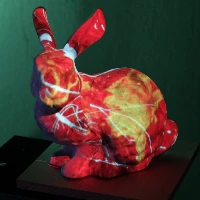
Self-supervised learning of object pose estimation using keypoint prediction
This paper describes recent developments in object specific pose and shape prediction from single images. The main contribution is a new approach to camera pose prediction by self-supervised learning of keypoints corresponding to locations on a category specific deformable shape. We designed a network to generate a proxy ground-truth heatmap from a set of keypoints distributed all over the category-specific mean shape, where each is represented by a unique color on a labeled texture. The proxy ground-truth heatmap is used to train a deep keypoint prediction network, which can be used in online inference. The proposed approach to camera pose prediction show significant improvements when compared with state-of-the-art methods. Our approach to camera pose prediction is used to infer 3D objects from 2D image frames of video sequences online. To train the reconstruction model, it receives only a silhouette mask from a single frame of a video sequence in every training step and a category-specific mean object shape. We conducted experiments using three different datasets representing the bird category: the CUB [51] image dataset, YouTubeVos and the Davis video datasets. The network is trained on the CUB dataset and tested on all three datasets. The online experiments are demonstrated on YouTubeVos and Davis [56] video sequences using a network trained on the CUB training set.
Sparse-view Pose Estimation and Reconstruction via Analysis by Generative Synthesis
Inferring the 3D structure underlying a set of multi-view images typically requires solving two co-dependent tasks -- accurate 3D reconstruction requires precise camera poses, and predicting camera poses relies on (implicitly or explicitly) modeling the underlying 3D. The classical framework of analysis by synthesis casts this inference as a joint optimization seeking to explain the observed pixels, and recent instantiations learn expressive 3D representations (e.g., Neural Fields) with gradient-descent-based pose refinement of initial pose estimates. However, given a sparse set of observed views, the observations may not provide sufficient direct evidence to obtain complete and accurate 3D. Moreover, large errors in pose estimation may not be easily corrected and can further degrade the inferred 3D. To allow robust 3D reconstruction and pose estimation in this challenging setup, we propose SparseAGS, a method that adapts this analysis-by-synthesis approach by: a) including novel-view-synthesis-based generative priors in conjunction with photometric objectives to improve the quality of the inferred 3D, and b) explicitly reasoning about outliers and using a discrete search with a continuous optimization-based strategy to correct them. We validate our framework across real-world and synthetic datasets in combination with several off-the-shelf pose estimation systems as initialization. We find that it significantly improves the base systems' pose accuracy while yielding high-quality 3D reconstructions that outperform the results from current multi-view reconstruction baselines.
iComMa: Inverting 3D Gaussian Splatting for Camera Pose Estimation via Comparing and Matching
We present a method named iComMa to address the 6D camera pose estimation problem in computer vision. Conventional pose estimation methods typically rely on the target's CAD model or necessitate specific network training tailored to particular object classes. Some existing methods have achieved promising results in mesh-free object and scene pose estimation by inverting the Neural Radiance Fields (NeRF). However, they still struggle with adverse initializations such as large rotations and translations. To address this issue, we propose an efficient method for accurate camera pose estimation by inverting 3D Gaussian Splatting (3DGS). Specifically, a gradient-based differentiable framework optimizes camera pose by minimizing the residual between the query image and the rendered image, requiring no training. An end-to-end matching module is designed to enhance the model's robustness against adverse initializations, while minimizing pixel-level comparing loss aids in precise pose estimation. Experimental results on synthetic and complex real-world data demonstrate the effectiveness of the proposed approach in challenging conditions and the accuracy of camera pose estimation.
Dynamic Camera Poses and Where to Find Them
Annotating camera poses on dynamic Internet videos at scale is critical for advancing fields like realistic video generation and simulation. However, collecting such a dataset is difficult, as most Internet videos are unsuitable for pose estimation. Furthermore, annotating dynamic Internet videos present significant challenges even for state-of-theart methods. In this paper, we introduce DynPose-100K, a large-scale dataset of dynamic Internet videos annotated with camera poses. Our collection pipeline addresses filtering using a carefully combined set of task-specific and generalist models. For pose estimation, we combine the latest techniques of point tracking, dynamic masking, and structure-from-motion to achieve improvements over the state-of-the-art approaches. Our analysis and experiments demonstrate that DynPose-100K is both large-scale and diverse across several key attributes, opening up avenues for advancements in various downstream applications.

Kaleidoscopic Background Attack: Disrupting Pose Estimation with Multi-Fold Radial Symmetry Textures
Camera pose estimation is a fundamental computer vision task that is essential for applications like visual localization and multi-view stereo reconstruction. In the object-centric scenarios with sparse inputs, the accuracy of pose estimation can be significantly influenced by background textures that occupy major portions of the images across different viewpoints. In light of this, we introduce the Kaleidoscopic Background Attack (KBA), which uses identical segments to form discs with multi-fold radial symmetry. These discs maintain high similarity across different viewpoints, enabling effective attacks on pose estimation models even with natural texture segments. Additionally, a projected orientation consistency loss is proposed to optimize the kaleidoscopic segments, leading to significant enhancement in the attack effectiveness. Experimental results show that optimized adversarial kaleidoscopic backgrounds can effectively attack various camera pose estimation models.
AnyCalib: On-Manifold Learning for Model-Agnostic Single-View Camera Calibration
We present AnyCalib, a method for calibrating the intrinsic parameters of a camera from a single in-the-wild image, that is agnostic to the camera model. Current methods are predominantly tailored to specific camera models and/or require extrinsic cues, such as the direction of gravity, to be visible in the image. In contrast, we argue that the perspective and distortion cues inherent in images are sufficient for model-agnostic camera calibration. To demonstrate this, we frame the calibration process as the regression of the rays corresponding to each pixel. We show, for the first time, that this intermediate representation allows for a closed-form recovery of the intrinsics for a wide range of camera models, including but not limited to: pinhole, Brown-Conrady and Kannala-Brandt. Our approach also applies to edited -- cropped and stretched -- images. Experimentally, we demonstrate that AnyCalib consistently outperforms alternative methods, including 3D foundation models, despite being trained on orders of magnitude less data. Code is available at https://github.com/javrtg/AnyCalib.

Learning Neural Volumetric Pose Features for Camera Localization
We introduce a novel neural volumetric pose feature, termed PoseMap, designed to enhance camera localization by encapsulating the information between images and the associated camera poses. Our framework leverages an Absolute Pose Regression (APR) architecture, together with an augmented NeRF module. This integration not only facilitates the generation of novel views to enrich the training dataset but also enables the learning of effective pose features. Additionally, we extend our architecture for self-supervised online alignment, allowing our method to be used and fine-tuned for unlabelled images within a unified framework. Experiments demonstrate that our method achieves 14.28% and 20.51% performance gain on average in indoor and outdoor benchmark scenes, outperforming existing APR methods with state-of-the-art accuracy.

Novel Object 6D Pose Estimation with a Single Reference View
Existing novel object 6D pose estimation methods typically rely on CAD models or dense reference views, which are both difficult to acquire. Using only a single reference view is more scalable, but challenging due to large pose discrepancies and limited geometric and spatial information. To address these issues, we propose a Single-Reference-based novel object 6D (SinRef-6D) pose estimation method. Our key idea is to iteratively establish point-wise alignment in the camera coordinate system based on state space models (SSMs). Specifically, iterative camera-space point-wise alignment can effectively handle large pose discrepancies, while our proposed RGB and Points SSMs can capture long-range dependencies and spatial information from a single view, offering linear complexity and superior spatial modeling capability. Once pre-trained on synthetic data, SinRef-6D can estimate the 6D pose of a novel object using only a single reference view, without requiring retraining or a CAD model. Extensive experiments on six popular datasets and real-world robotic scenes demonstrate that we achieve on-par performance with CAD-based and dense reference view-based methods, despite operating in the more challenging single reference setting. Code will be released at https://github.com/CNJianLiu/SinRef-6D.

Scene Coordinate Reconstruction: Posing of Image Collections via Incremental Learning of a Relocalizer
We address the task of estimating camera parameters from a set of images depicting a scene. Popular feature-based structure-from-motion (SfM) tools solve this task by incremental reconstruction: they repeat triangulation of sparse 3D points and registration of more camera views to the sparse point cloud. We re-interpret incremental structure-from-motion as an iterated application and refinement of a visual relocalizer, that is, of a method that registers new views to the current state of the reconstruction. This perspective allows us to investigate alternative visual relocalizers that are not rooted in local feature matching. We show that scene coordinate regression, a learning-based relocalization approach, allows us to build implicit, neural scene representations from unposed images. Different from other learning-based reconstruction methods, we do not require pose priors nor sequential inputs, and we optimize efficiently over thousands of images. Our method, ACE0 (ACE Zero), estimates camera poses to an accuracy comparable to feature-based SfM, as demonstrated by novel view synthesis. Project page: https://nianticlabs.github.io/acezero/

TokenHMR: Advancing Human Mesh Recovery with a Tokenized Pose Representation
We address the problem of regressing 3D human pose and shape from a single image, with a focus on 3D accuracy. The current best methods leverage large datasets of 3D pseudo-ground-truth (p-GT) and 2D keypoints, leading to robust performance. With such methods, we observe a paradoxical decline in 3D pose accuracy with increasing 2D accuracy. This is caused by biases in the p-GT and the use of an approximate camera projection model. We quantify the error induced by current camera models and show that fitting 2D keypoints and p-GT accurately causes incorrect 3D poses. Our analysis defines the invalid distances within which minimizing 2D and p-GT losses is detrimental. We use this to formulate a new loss Threshold-Adaptive Loss Scaling (TALS) that penalizes gross 2D and p-GT losses but not smaller ones. With such a loss, there are many 3D poses that could equally explain the 2D evidence. To reduce this ambiguity we need a prior over valid human poses but such priors can introduce unwanted bias. To address this, we exploit a tokenized representation of human pose and reformulate the problem as token prediction. This restricts the estimated poses to the space of valid poses, effectively providing a uniform prior. Extensive experiments on the EMDB and 3DPW datasets show that our reformulated keypoint loss and tokenization allows us to train on in-the-wild data while improving 3D accuracy over the state-of-the-art. Our models and code are available for research at https://tokenhmr.is.tue.mpg.de.

P1AC: Revisiting Absolute Pose From a Single Affine Correspondence
Affine correspondences have traditionally been used to improve feature matching over wide baselines. While recent work has successfully used affine correspondences to solve various relative camera pose estimation problems, less attention has been given to their use in absolute pose estimation. We introduce the first general solution to the problem of estimating the pose of a calibrated camera given a single observation of an oriented point and an affine correspondence. The advantage of our approach (P1AC) is that it requires only a single correspondence, in comparison to the traditional point-based approach (P3P), significantly reducing the combinatorics in robust estimation. P1AC provides a general solution that removes restrictive assumptions made in prior work and is applicable to large-scale image-based localization. We propose a minimal solution to the P1AC problem and evaluate our novel solver on synthetic data, showing its numerical stability and performance under various types of noise. On standard image-based localization benchmarks we show that P1AC achieves more accurate results than the widely used P3P algorithm. Code for our method is available at https://github.com/jonathanventura/P1AC/ .
FAR: Flexible, Accurate and Robust 6DoF Relative Camera Pose Estimation
Estimating relative camera poses between images has been a central problem in computer vision. Methods that find correspondences and solve for the fundamental matrix offer high precision in most cases. Conversely, methods predicting pose directly using neural networks are more robust to limited overlap and can infer absolute translation scale, but at the expense of reduced precision. We show how to combine the best of both methods; our approach yields results that are both precise and robust, while also accurately inferring translation scales. At the heart of our model lies a Transformer that (1) learns to balance between solved and learned pose estimations, and (2) provides a prior to guide a solver. A comprehensive analysis supports our design choices and demonstrates that our method adapts flexibly to various feature extractors and correspondence estimators, showing state-of-the-art performance in 6DoF pose estimation on Matterport3D, InteriorNet, StreetLearn, and Map-free Relocalization.



Back to Optimization: Diffusion-based Zero-Shot 3D Human Pose Estimation
Learning-based methods have dominated the 3D human pose estimation (HPE) tasks with significantly better performance in most benchmarks than traditional optimization-based methods. Nonetheless, 3D HPE in the wild is still the biggest challenge of learning-based models, whether with 2D-3D lifting, image-to-3D, or diffusion-based methods, since the trained networks implicitly learn camera intrinsic parameters and domain-based 3D human pose distributions and estimate poses by statistical average. On the other hand, the optimization-based methods estimate results case-by-case, which can predict more diverse and sophisticated human poses in the wild. By combining the advantages of optimization-based and learning-based methods, we propose the Zero-shot Diffusion-based Optimization (ZeDO) pipeline for 3D HPE to solve the problem of cross-domain and in-the-wild 3D HPE. Our multi-hypothesis ZeDO achieves state-of-the-art (SOTA) performance on Human3.6M as minMPJPE 51.4mm without training with any 2D-3D or image-3D pairs. Moreover, our single-hypothesis ZeDO achieves SOTA performance on 3DPW dataset with PA-MPJPE 42.6mm on cross-dataset evaluation, which even outperforms learning-based methods trained on 3DPW.

FLARE: Feed-forward Geometry, Appearance and Camera Estimation from Uncalibrated Sparse Views
We present FLARE, a feed-forward model designed to infer high-quality camera poses and 3D geometry from uncalibrated sparse-view images (i.e., as few as 2-8 inputs), which is a challenging yet practical setting in real-world applications. Our solution features a cascaded learning paradigm with camera pose serving as the critical bridge, recognizing its essential role in mapping 3D structures onto 2D image planes. Concretely, FLARE starts with camera pose estimation, whose results condition the subsequent learning of geometric structure and appearance, optimized through the objectives of geometry reconstruction and novel-view synthesis. Utilizing large-scale public datasets for training, our method delivers state-of-the-art performance in the tasks of pose estimation, geometry reconstruction, and novel view synthesis, while maintaining the inference efficiency (i.e., less than 0.5 seconds). The project page and code can be found at: https://zhanghe3z.github.io/FLARE/

Progressively Optimized Local Radiance Fields for Robust View Synthesis
We present an algorithm for reconstructing the radiance field of a large-scale scene from a single casually captured video. The task poses two core challenges. First, most existing radiance field reconstruction approaches rely on accurate pre-estimated camera poses from Structure-from-Motion algorithms, which frequently fail on in-the-wild videos. Second, using a single, global radiance field with finite representational capacity does not scale to longer trajectories in an unbounded scene. For handling unknown poses, we jointly estimate the camera poses with radiance field in a progressive manner. We show that progressive optimization significantly improves the robustness of the reconstruction. For handling large unbounded scenes, we dynamically allocate new local radiance fields trained with frames within a temporal window. This further improves robustness (e.g., performs well even under moderate pose drifts) and allows us to scale to large scenes. Our extensive evaluation on the Tanks and Temples dataset and our collected outdoor dataset, Static Hikes, show that our approach compares favorably with the state-of-the-art.


A Commute in Data: The comma2k19 Dataset
comma.ai presents comma2k19, a dataset of over 33 hours of commute in California's 280 highway. This means 2019 segments, 1 minute long each, on a 20km section of highway driving between California's San Jose and San Francisco. The dataset was collected using comma EONs that have sensors similar to those of any modern smartphone including a road-facing camera, phone GPS, thermometers and a 9-axis IMU. Additionally, the EON captures raw GNSS measurements and all CAN data sent by the car with a comma grey panda. Laika, an open-source GNSS processing library, is also introduced here. Laika produces 40% more accurate positions than the GNSS module used to collect the raw data. This dataset includes pose (position + orientation) estimates in a global reference frame of the recording camera. These poses were computed with a tightly coupled INS/GNSS/Vision optimizer that relies on data processed by Laika. comma2k19 is ideal for development and validation of tightly coupled GNSS algorithms and mapping algorithms that work with commodity sensors.
Uncertainty-Aware DNN for Multi-Modal Camera Localization
Camera localization, i.e., camera pose regression, represents an important task in computer vision since it has many practical applications such as in the context of intelligent vehicles and their localization. Having reliable estimates of the regression uncertainties is also important, as it would allow us to catch dangerous localization failures. In the literature, uncertainty estimation in Deep Neural Networks (DNNs) is often performed through sampling methods, such as Monte Carlo Dropout (MCD) and Deep Ensemble (DE), at the expense of undesirable execution time or an increase in hardware resources. In this work, we considered an uncertainty estimation approach named Deep Evidential Regression (DER) that avoids any sampling technique, providing direct uncertainty estimates. Our goal is to provide a systematic approach to intercept localization failures of camera localization systems based on DNNs architectures, by analyzing the generated uncertainties. We propose to exploit CMRNet, a DNN approach for multi-modal image to LiDAR map registration, by modifying its internal configuration to allow for extensive experimental activity on the KITTI dataset. The experimental section highlights CMRNet's major flaws and proves that our proposal does not compromise the original localization performances but also provides, at the same time, the necessary introspection measures that would allow end-users to act accordingly.
Robust Frame-to-Frame Camera Rotation Estimation in Crowded Scenes
We present an approach to estimating camera rotation in crowded, real-world scenes from handheld monocular video. While camera rotation estimation is a well-studied problem, no previous methods exhibit both high accuracy and acceptable speed in this setting. Because the setting is not addressed well by other datasets, we provide a new dataset and benchmark, with high-accuracy, rigorously verified ground truth, on 17 video sequences. Methods developed for wide baseline stereo (e.g., 5-point methods) perform poorly on monocular video. On the other hand, methods used in autonomous driving (e.g., SLAM) leverage specific sensor setups, specific motion models, or local optimization strategies (lagging batch processing) and do not generalize well to handheld video. Finally, for dynamic scenes, commonly used robustification techniques like RANSAC require large numbers of iterations, and become prohibitively slow. We introduce a novel generalization of the Hough transform on SO(3) to efficiently and robustly find the camera rotation most compatible with optical flow. Among comparably fast methods, ours reduces error by almost 50\% over the next best, and is more accurate than any method, irrespective of speed. This represents a strong new performance point for crowded scenes, an important setting for computer vision. The code and the dataset are available at https://fabiendelattre.com/robust-rotation-estimation.
MegaSaM: Accurate, Fast, and Robust Structure and Motion from Casual Dynamic Videos
We present a system that allows for accurate, fast, and robust estimation of camera parameters and depth maps from casual monocular videos of dynamic scenes. Most conventional structure from motion and monocular SLAM techniques assume input videos that feature predominantly static scenes with large amounts of parallax. Such methods tend to produce erroneous estimates in the absence of these conditions. Recent neural network-based approaches attempt to overcome these challenges; however, such methods are either computationally expensive or brittle when run on dynamic videos with uncontrolled camera motion or unknown field of view. We demonstrate the surprising effectiveness of a deep visual SLAM framework: with careful modifications to its training and inference schemes, this system can scale to real-world videos of complex dynamic scenes with unconstrained camera paths, including videos with little camera parallax. Extensive experiments on both synthetic and real videos demonstrate that our system is significantly more accurate and robust at camera pose and depth estimation when compared with prior and concurrent work, with faster or comparable running times. See interactive results on our project page: https://mega-sam.github.io/
Platypose: Calibrated Zero-Shot Multi-Hypothesis 3D Human Motion Estimation
Single camera 3D pose estimation is an ill-defined problem due to inherent ambiguities from depth, occlusion or keypoint noise. Multi-hypothesis pose estimation accounts for this uncertainty by providing multiple 3D poses consistent with the 2D measurements. Current research has predominantly concentrated on generating multiple hypotheses for single frame static pose estimation. In this study we focus on the new task of multi-hypothesis motion estimation. Motion estimation is not simply pose estimation applied to multiple frames, which would ignore temporal correlation across frames. Instead, it requires distributions which are capable of generating temporally consistent samples, which is significantly more challenging. To this end, we introduce Platypose, a framework that uses a diffusion model pretrained on 3D human motion sequences for zero-shot 3D pose sequence estimation. Platypose outperforms baseline methods on multiple hypotheses for motion estimation. Additionally, Platypose also achieves state-of-the-art calibration and competitive joint error when tested on static poses from Human3.6M, MPI-INF-3DHP and 3DPW. Finally, because it is zero-shot, our method generalizes flexibly to different settings such as multi-camera inference.

Robust 360-8PA: Redesigning The Normalized 8-point Algorithm for 360-FoV Images
This paper presents a novel preconditioning strategy for the classic 8-point algorithm (8-PA) for estimating an essential matrix from 360-FoV images (i.e., equirectangular images) in spherical projection. To alleviate the effect of uneven key-feature distributions and outlier correspondences, which can potentially decrease the accuracy of an essential matrix, our method optimizes a non-rigid transformation to deform a spherical camera into a new spatial domain, defining a new constraint and a more robust and accurate solution for an essential matrix. Through several experiments using random synthetic points, 360-FoV, and fish-eye images, we demonstrate that our normalization can increase the camera pose accuracy by about 20% without significantly overhead the computation time. In addition, we present further benefits of our method through both a constant weighted least-square optimization that improves further the well known Gold Standard Method (GSM) (i.e., the non-linear optimization by using epipolar errors); and a relaxation of the number of RANSAC iterations, both showing that our normalization outcomes a more reliable, robust, and accurate solution.
PROFusion: Robust and Accurate Dense Reconstruction via Camera Pose Regression and Optimization
Real-time dense scene reconstruction during unstable camera motions is crucial for robotics, yet current RGB-D SLAM systems fail when cameras experience large viewpoint changes, fast motions, or sudden shaking. Classical optimization-based methods deliver high accuracy but fail with poor initialization during large motions, while learning-based approaches provide robustness but lack sufficient accuracy for dense reconstruction. We address this challenge through a combination of learning-based initialization with optimization-based refinement. Our method employs a camera pose regression network to predict metric-aware relative poses from consecutive RGB-D frames, which serve as reliable starting points for a randomized optimization algorithm that further aligns depth images with the scene geometry. Extensive experiments demonstrate promising results: our approach outperforms the best competitor on challenging benchmarks, while maintaining comparable accuracy on stable motion sequences. The system operates in real-time, showcasing that combining simple and principled techniques can achieve both robustness for unstable motions and accuracy for dense reconstruction. Project page: https://github.com/siyandong/PROFusion.
RGB-Only Supervised Camera Parameter Optimization in Dynamic Scenes
Although COLMAP has long remained the predominant method for camera parameter optimization in static scenes, it is constrained by its lengthy runtime and reliance on ground truth (GT) motion masks for application to dynamic scenes. Many efforts attempted to improve it by incorporating more priors as supervision such as GT focal length, motion masks, 3D point clouds, camera poses, and metric depth, which, however, are typically unavailable in casually captured RGB videos. In this paper, we propose a novel method for more accurate and efficient camera parameter optimization in dynamic scenes solely supervised by a single RGB video. Our method consists of three key components: (1) Patch-wise Tracking Filters, to establish robust and maximally sparse hinge-like relations across the RGB video. (2) Outlier-aware Joint Optimization, for efficient camera parameter optimization by adaptive down-weighting of moving outliers, without reliance on motion priors. (3) A Two-stage Optimization Strategy, to enhance stability and optimization speed by a trade-off between the Softplus limits and convex minima in losses. We visually and numerically evaluate our camera estimates. To further validate accuracy, we feed the camera estimates into a 4D reconstruction method and assess the resulting 3D scenes, and rendered 2D RGB and depth maps. We perform experiments on 4 real-world datasets (NeRF-DS, DAVIS, iPhone, and TUM-dynamics) and 1 synthetic dataset (MPI-Sintel), demonstrating that our method estimates camera parameters more efficiently and accurately with a single RGB video as the only supervision.

Deep Learning for Camera Calibration and Beyond: A Survey
Camera calibration involves estimating camera parameters to infer geometric features from captured sequences, which is crucial for computer vision and robotics. However, conventional calibration is laborious and requires dedicated collection. Recent efforts show that learning-based solutions have the potential to be used in place of the repeatability works of manual calibrations. Among these solutions, various learning strategies, networks, geometric priors, and datasets have been investigated. In this paper, we provide a comprehensive survey of learning-based camera calibration techniques, by analyzing their strengths and limitations. Our main calibration categories include the standard pinhole camera model, distortion camera model, cross-view model, and cross-sensor model, following the research trend and extended applications. As there is no unified benchmark in this community, we collect a holistic calibration dataset that can serve as a public platform to evaluate the generalization of existing methods. It comprises both synthetic and real-world data, with images and videos captured by different cameras in diverse scenes. Toward the end of this paper, we discuss the challenges and provide further research directions. To our knowledge, this is the first survey for the learning-based camera calibration (spanned 10 years). The summarized methods, datasets, and benchmarks are available and will be regularly updated at https://github.com/KangLiao929/Awesome-Deep-Camera-Calibration.

CapeX: Category-Agnostic Pose Estimation from Textual Point Explanation
Conventional 2D pose estimation models are constrained by their design to specific object categories. This limits their applicability to predefined objects. To overcome these limitations, category-agnostic pose estimation (CAPE) emerged as a solution. CAPE aims to facilitate keypoint localization for diverse object categories using a unified model, which can generalize from minimal annotated support images. Recent CAPE works have produced object poses based on arbitrary keypoint definitions annotated on a user-provided support image. Our work departs from conventional CAPE methods, which require a support image, by adopting a text-based approach instead of the support image. Specifically, we use a pose-graph, where nodes represent keypoints that are described with text. This representation takes advantage of the abstraction of text descriptions and the structure imposed by the graph. Our approach effectively breaks symmetry, preserves structure, and improves occlusion handling. We validate our novel approach using the MP-100 benchmark, a comprehensive dataset spanning over 100 categories and 18,000 images. Under a 1-shot setting, our solution achieves a notable performance boost of 1.07\%, establishing a new state-of-the-art for CAPE. Additionally, we enrich the dataset by providing text description annotations, further enhancing its utility for future research.

PAGE-4D: Disentangled Pose and Geometry Estimation for 4D Perception
Recent 3D feed-forward models, such as the Visual Geometry Grounded Transformer (VGGT), have shown strong capability in inferring 3D attributes of static scenes. However, since they are typically trained on static datasets, these models often struggle in real-world scenarios involving complex dynamic elements, such as moving humans or deformable objects like umbrellas. To address this limitation, we introduce PAGE-4D, a feedforward model that extends VGGT to dynamic scenes, enabling camera pose estimation, depth prediction, and point cloud reconstruction -- all without post-processing. A central challenge in multi-task 4D reconstruction is the inherent conflict between tasks: accurate camera pose estimation requires suppressing dynamic regions, while geometry reconstruction requires modeling them. To resolve this tension, we propose a dynamics-aware aggregator that disentangles static and dynamic information by predicting a dynamics-aware mask -- suppressing motion cues for pose estimation while amplifying them for geometry reconstruction. Extensive experiments show that PAGE-4D consistently outperforms the original VGGT in dynamic scenarios, achieving superior results in camera pose estimation, monocular and video depth estimation, and dense point map reconstruction.
3D-Aware Hypothesis & Verification for Generalizable Relative Object Pose Estimation
Prior methods that tackle the problem of generalizable object pose estimation highly rely on having dense views of the unseen object. By contrast, we address the scenario where only a single reference view of the object is available. Our goal then is to estimate the relative object pose between this reference view and a query image that depicts the object in a different pose. In this scenario, robust generalization is imperative due to the presence of unseen objects during testing and the large-scale object pose variation between the reference and the query. To this end, we present a new hypothesis-and-verification framework, in which we generate and evaluate multiple pose hypotheses, ultimately selecting the most reliable one as the relative object pose. To measure reliability, we introduce a 3D-aware verification that explicitly applies 3D transformations to the 3D object representations learned from the two input images. Our comprehensive experiments on the Objaverse, LINEMOD, and CO3D datasets evidence the superior accuracy of our approach in relative pose estimation and its robustness in large-scale pose variations, when dealing with unseen objects.

Dynamic Visual SLAM using a General 3D Prior
Reliable incremental estimation of camera poses and 3D reconstruction is key to enable various applications including robotics, interactive visualization, and augmented reality. However, this task is particularly challenging in dynamic natural environments, where scene dynamics can severely deteriorate camera pose estimation accuracy. In this work, we propose a novel monocular visual SLAM system that can robustly estimate camera poses in dynamic scenes. To this end, we leverage the complementary strengths of geometric patch-based online bundle adjustment and recent feed-forward reconstruction models. Specifically, we propose a feed-forward reconstruction model to precisely filter out dynamic regions, while also utilizing its depth prediction to enhance the robustness of the patch-based visual SLAM. By aligning depth prediction with estimated patches from bundle adjustment, we robustly handle the inherent scale ambiguities of the batch-wise application of the feed-forward reconstruction model.
Geometry-Aware Learning of Maps for Camera Localization
Maps are a key component in image-based camera localization and visual SLAM systems: they are used to establish geometric constraints between images, correct drift in relative pose estimation, and relocalize cameras after lost tracking. The exact definitions of maps, however, are often application-specific and hand-crafted for different scenarios (e.g. 3D landmarks, lines, planes, bags of visual words). We propose to represent maps as a deep neural net called MapNet, which enables learning a data-driven map representation. Unlike prior work on learning maps, MapNet exploits cheap and ubiquitous sensory inputs like visual odometry and GPS in addition to images and fuses them together for camera localization. Geometric constraints expressed by these inputs, which have traditionally been used in bundle adjustment or pose-graph optimization, are formulated as loss terms in MapNet training and also used during inference. In addition to directly improving localization accuracy, this allows us to update the MapNet (i.e., maps) in a self-supervised manner using additional unlabeled video sequences from the scene. We also propose a novel parameterization for camera rotation which is better suited for deep-learning based camera pose regression. Experimental results on both the indoor 7-Scenes dataset and the outdoor Oxford RobotCar dataset show significant performance improvement over prior work. The MapNet project webpage is https://goo.gl/mRB3Au.

EgoLoc: Revisiting 3D Object Localization from Egocentric Videos with Visual Queries
With the recent advances in video and 3D understanding, novel 4D spatio-temporal methods fusing both concepts have emerged. Towards this direction, the Ego4D Episodic Memory Benchmark proposed a task for Visual Queries with 3D Localization (VQ3D). Given an egocentric video clip and an image crop depicting a query object, the goal is to localize the 3D position of the center of that query object with respect to the camera pose of a query frame. Current methods tackle the problem of VQ3D by unprojecting the 2D localization results of the sibling task Visual Queries with 2D Localization (VQ2D) into 3D predictions. Yet, we point out that the low number of camera poses caused by camera re-localization from previous VQ3D methods severally hinders their overall success rate. In this work, we formalize a pipeline (we dub EgoLoc) that better entangles 3D multiview geometry with 2D object retrieval from egocentric videos. Our approach involves estimating more robust camera poses and aggregating multi-view 3D displacements by leveraging the 2D detection confidence, which enhances the success rate of object queries and leads to a significant improvement in the VQ3D baseline performance. Specifically, our approach achieves an overall success rate of up to 87.12%, which sets a new state-of-the-art result in the VQ3D task. We provide a comprehensive empirical analysis of the VQ3D task and existing solutions, and highlight the remaining challenges in VQ3D. The code is available at https://github.com/Wayne-Mai/EgoLoc.


GVDepth: Zero-Shot Monocular Depth Estimation for Ground Vehicles based on Probabilistic Cue Fusion
Generalizing metric monocular depth estimation presents a significant challenge due to its ill-posed nature, while the entanglement between camera parameters and depth amplifies issues further, hindering multi-dataset training and zero-shot accuracy. This challenge is particularly evident in autonomous vehicles and mobile robotics, where data is collected with fixed camera setups, limiting the geometric diversity. Yet, this context also presents an opportunity: the fixed relationship between the camera and the ground plane imposes additional perspective geometry constraints, enabling depth regression via vertical image positions of objects. However, this cue is highly susceptible to overfitting, thus we propose a novel canonical representation that maintains consistency across varied camera setups, effectively disentangling depth from specific parameters and enhancing generalization across datasets. We also propose a novel architecture that adaptively and probabilistically fuses depths estimated via object size and vertical image position cues. A comprehensive evaluation demonstrates the effectiveness of the proposed approach on five autonomous driving datasets, achieving accurate metric depth estimation for varying resolutions, aspect ratios and camera setups. Notably, we achieve comparable accuracy to existing zero-shot methods, despite training on a single dataset with a single-camera setup.
UNOPose: Unseen Object Pose Estimation with an Unposed RGB-D Reference Image
Unseen object pose estimation methods often rely on CAD models or multiple reference views, making the onboarding stage costly. To simplify reference acquisition, we aim to estimate the unseen object's pose through a single unposed RGB-D reference image. While previous works leverage reference images as pose anchors to limit the range of relative pose, our scenario presents significant challenges since the relative transformation could vary across the entire SE(3) space. Moreover, factors like occlusion, sensor noise, and extreme geometry could result in low viewpoint overlap. To address these challenges, we present a novel approach and benchmark, termed UNOPose, for unseen one-reference-based object pose estimation. Building upon a coarse-to-fine paradigm, UNOPose constructs an SE(3)-invariant reference frame to standardize object representation despite pose and size variations. To alleviate small overlap across viewpoints, we recalibrate the weight of each correspondence based on its predicted likelihood of being within the overlapping region. Evaluated on our proposed benchmark based on the BOP Challenge, UNOPose demonstrates superior performance, significantly outperforming traditional and learning-based methods in the one-reference setting and remaining competitive with CAD-model-based methods. The code and dataset are available at https://github.com/shanice-l/UNOPose.

Extending 6D Object Pose Estimators for Stereo Vision
Estimating the 6D pose of objects accurately, quickly, and robustly remains a difficult task. However, recent methods for directly regressing poses from RGB images using dense features have achieved state-of-the-art results. Stereo vision, which provides an additional perspective on the object, can help reduce pose ambiguity and occlusion. Moreover, stereo can directly infer the distance of an object, while mono-vision requires internalized knowledge of the object's size. To extend the state-of-the-art in 6D object pose estimation to stereo, we created a BOP compatible stereo version of the YCB-V dataset. Our method outperforms state-of-the-art 6D pose estimation algorithms by utilizing stereo vision and can easily be adopted for other dense feature-based algorithms.

Object Pose Estimation with Statistical Guarantees: Conformal Keypoint Detection and Geometric Uncertainty Propagation
The two-stage object pose estimation paradigm first detects semantic keypoints on the image and then estimates the 6D pose by minimizing reprojection errors. Despite performing well on standard benchmarks, existing techniques offer no provable guarantees on the quality and uncertainty of the estimation. In this paper, we inject two fundamental changes, namely conformal keypoint detection and geometric uncertainty propagation, into the two-stage paradigm and propose the first pose estimator that endows an estimation with provable and computable worst-case error bounds. On one hand, conformal keypoint detection applies the statistical machinery of inductive conformal prediction to convert heuristic keypoint detections into circular or elliptical prediction sets that cover the groundtruth keypoints with a user-specified marginal probability (e.g., 90%). Geometric uncertainty propagation, on the other, propagates the geometric constraints on the keypoints to the 6D object pose, leading to a Pose UnceRtainty SEt (PURSE) that guarantees coverage of the groundtruth pose with the same probability. The PURSE, however, is a nonconvex set that does not directly lead to estimated poses and uncertainties. Therefore, we develop RANdom SAmple averaGing (RANSAG) to compute an average pose and apply semidefinite relaxation to upper bound the worst-case errors between the average pose and the groundtruth. On the LineMOD Occlusion dataset we demonstrate: (i) the PURSE covers the groundtruth with valid probabilities; (ii) the worst-case error bounds provide correct uncertainty quantification; and (iii) the average pose achieves better or similar accuracy as representative methods based on sparse keypoints.
ICON: Incremental CONfidence for Joint Pose and Radiance Field Optimization
Neural Radiance Fields (NeRF) exhibit remarkable performance for Novel View Synthesis (NVS) given a set of 2D images. However, NeRF training requires accurate camera pose for each input view, typically obtained by Structure-from-Motion (SfM) pipelines. Recent works have attempted to relax this constraint, but they still often rely on decent initial poses which they can refine. Here we aim at removing the requirement for pose initialization. We present Incremental CONfidence (ICON), an optimization procedure for training NeRFs from 2D video frames. ICON only assumes smooth camera motion to estimate initial guess for poses. Further, ICON introduces ``confidence": an adaptive measure of model quality used to dynamically reweight gradients. ICON relies on high-confidence poses to learn NeRF, and high-confidence 3D structure (as encoded by NeRF) to learn poses. We show that ICON, without prior pose initialization, achieves superior performance in both CO3D and HO3D versus methods which use SfM pose.




iFusion: Inverting Diffusion for Pose-Free Reconstruction from Sparse Views
We present iFusion, a novel 3D object reconstruction framework that requires only two views with unknown camera poses. While single-view reconstruction yields visually appealing results, it can deviate significantly from the actual object, especially on unseen sides. Additional views improve reconstruction fidelity but necessitate known camera poses. However, assuming the availability of pose may be unrealistic, and existing pose estimators fail in sparse view scenarios. To address this, we harness a pre-trained novel view synthesis diffusion model, which embeds implicit knowledge about the geometry and appearance of diverse objects. Our strategy unfolds in three steps: (1) We invert the diffusion model for camera pose estimation instead of synthesizing novel views. (2) The diffusion model is fine-tuned using provided views and estimated poses, turned into a novel view synthesizer tailored for the target object. (3) Leveraging registered views and the fine-tuned diffusion model, we reconstruct the 3D object. Experiments demonstrate strong performance in both pose estimation and novel view synthesis. Moreover, iFusion seamlessly integrates with various reconstruction methods and enhances them.
PoseCNN: A Convolutional Neural Network for 6D Object Pose Estimation in Cluttered Scenes
Estimating the 6D pose of known objects is important for robots to interact with the real world. The problem is challenging due to the variety of objects as well as the complexity of a scene caused by clutter and occlusions between objects. In this work, we introduce PoseCNN, a new Convolutional Neural Network for 6D object pose estimation. PoseCNN estimates the 3D translation of an object by localizing its center in the image and predicting its distance from the camera. The 3D rotation of the object is estimated by regressing to a quaternion representation. We also introduce a novel loss function that enables PoseCNN to handle symmetric objects. In addition, we contribute a large scale video dataset for 6D object pose estimation named the YCB-Video dataset. Our dataset provides accurate 6D poses of 21 objects from the YCB dataset observed in 92 videos with 133,827 frames. We conduct extensive experiments on our YCB-Video dataset and the OccludedLINEMOD dataset to show that PoseCNN is highly robust to occlusions, can handle symmetric objects, and provide accurate pose estimation using only color images as input. When using depth data to further refine the poses, our approach achieves state-of-the-art results on the challenging OccludedLINEMOD dataset. Our code and dataset are available at https://rse-lab.cs.washington.edu/projects/posecnn/.
PersPose: 3D Human Pose Estimation with Perspective Encoding and Perspective Rotation
Monocular 3D human pose estimation (HPE) methods estimate the 3D positions of joints from individual images. Existing 3D HPE approaches often use the cropped image alone as input for their models. However, the relative depths of joints cannot be accurately estimated from cropped images without the corresponding camera intrinsics, which determine the perspective relationship between 3D objects and the cropped images. In this work, we introduce Perspective Encoding (PE) to encode the camera intrinsics of the cropped images. Moreover, since the human subject can appear anywhere within the original image, the perspective relationship between the 3D scene and the cropped image differs significantly, which complicates model fitting. Additionally, the further the human subject deviates from the image center, the greater the perspective distortions in the cropped image. To address these issues, we propose Perspective Rotation (PR), a transformation applied to the original image that centers the human subject, thereby reducing perspective distortions and alleviating the difficulty of model fitting. By incorporating PE and PR, we propose a novel 3D HPE framework, PersPose. Experimental results demonstrate that PersPose achieves state-of-the-art (SOTA) performance on the 3DPW, MPI-INF-3DHP, and Human3.6M datasets. For example, on the in-the-wild dataset 3DPW, PersPose achieves an MPJPE of 60.1 mm, 7.54% lower than the previous SOTA approach. Code is available at: https://github.com/KenAdamsJoseph/PersPose.
SpatialVID: A Large-Scale Video Dataset with Spatial Annotations
Significant progress has been made in spatial intelligence, spanning both spatial reconstruction and world exploration. However, the scalability and real-world fidelity of current models remain severely constrained by the scarcity of large-scale, high-quality training data. While several datasets provide camera pose information, they are typically limited in scale, diversity, and annotation richness, particularly for real-world dynamic scenes with ground-truth camera motion. To this end, we collect SpatialVID, a dataset consists of a large corpus of in-the-wild videos with diverse scenes, camera movements and dense 3D annotations such as per-frame camera poses, depth, and motion instructions. Specifically, we collect more than 21,000 hours of raw video, and process them into 2.7 million clips through a hierarchical filtering pipeline, totaling 7,089 hours of dynamic content. A subsequent annotation pipeline enriches these clips with detailed spatial and semantic information, including camera poses, depth maps, dynamic masks, structured captions, and serialized motion instructions. Analysis of SpatialVID's data statistics reveals a richness and diversity that directly foster improved model generalization and performance, establishing it as a key asset for the video and 3D vision research community.




3D-MuPPET: 3D Multi-Pigeon Pose Estimation and Tracking
Markerless methods for animal posture tracking have been rapidly developing recently, but frameworks and benchmarks for tracking large animal groups in 3D are still lacking. To overcome this gap in the literature, we present 3D-MuPPET, a framework to estimate and track 3D poses of up to 10 pigeons at interactive speed using multiple camera views. We train a pose estimator to infer 2D keypoints and bounding boxes of multiple pigeons, then triangulate the keypoints to 3D. For identity matching of individuals in all views, we first dynamically match 2D detections to global identities in the first frame, then use a 2D tracker to maintain IDs across views in subsequent frames. We achieve comparable accuracy to a state of the art 3D pose estimator in terms of median error and Percentage of Correct Keypoints. Additionally, we benchmark the inference speed of 3D-MuPPET, with up to 9.45 fps in 2D and 1.89 fps in 3D, and perform quantitative tracking evaluation, which yields encouraging results. Finally, we showcase two novel applications for 3D-MuPPET. First, we train a model with data of single pigeons and achieve comparable results in 2D and 3D posture estimation for up to 5 pigeons. Second, we show that 3D-MuPPET also works in outdoors without additional annotations from natural environments. Both use cases simplify the domain shift to new species and environments, largely reducing annotation effort needed for 3D posture tracking. To the best of our knowledge we are the first to present a framework for 2D/3D animal posture and trajectory tracking that works in both indoor and outdoor environments for up to 10 individuals. We hope that the framework can open up new opportunities in studying animal collective behaviour and encourages further developments in 3D multi-animal posture tracking.
Multiple View Geometry Transformers for 3D Human Pose Estimation
In this work, we aim to improve the 3D reasoning ability of Transformers in multi-view 3D human pose estimation. Recent works have focused on end-to-end learning-based transformer designs, which struggle to resolve geometric information accurately, particularly during occlusion. Instead, we propose a novel hybrid model, MVGFormer, which has a series of geometric and appearance modules organized in an iterative manner. The geometry modules are learning-free and handle all viewpoint-dependent 3D tasks geometrically which notably improves the model's generalization ability. The appearance modules are learnable and are dedicated to estimating 2D poses from image signals end-to-end which enables them to achieve accurate estimates even when occlusion occurs, leading to a model that is both accurate and generalizable to new cameras and geometries. We evaluate our approach for both in-domain and out-of-domain settings, where our model consistently outperforms state-of-the-art methods, and especially does so by a significant margin in the out-of-domain setting. We will release the code and models: https://github.com/XunshanMan/MVGFormer.
EpipolarNVS: leveraging on Epipolar geometry for single-image Novel View Synthesis
Novel-view synthesis (NVS) can be tackled through different approaches, depending on the general setting: a single source image to a short video sequence, exact or noisy camera pose information, 3D-based information such as point clouds etc. The most challenging scenario, the one where we stand in this work, only considers a unique source image to generate a novel one from another viewpoint. However, in such a tricky situation, the latest learning-based solutions often struggle to integrate the camera viewpoint transformation. Indeed, the extrinsic information is often passed as-is, through a low-dimensional vector. It might even occur that such a camera pose, when parametrized as Euler angles, is quantized through a one-hot representation. This vanilla encoding choice prevents the learnt architecture from inferring novel views on a continuous basis (from a camera pose perspective). We claim it exists an elegant way to better encode relative camera pose, by leveraging 3D-related concepts such as the epipolar constraint. We, therefore, introduce an innovative method that encodes the viewpoint transformation as a 2D feature image. Such a camera encoding strategy gives meaningful insights to the network regarding how the camera has moved in space between the two views. By encoding the camera pose information as a finite number of coloured epipolar lines, we demonstrate through our experiments that our strategy outperforms vanilla encoding.

CAMPARI: Camera-Aware Decomposed Generative Neural Radiance Fields
Tremendous progress in deep generative models has led to photorealistic image synthesis. While achieving compelling results, most approaches operate in the two-dimensional image domain, ignoring the three-dimensional nature of our world. Several recent works therefore propose generative models which are 3D-aware, i.e., scenes are modeled in 3D and then rendered differentiably to the image plane. This leads to impressive 3D consistency, but incorporating such a bias comes at a price: the camera needs to be modeled as well. Current approaches assume fixed intrinsics and a predefined prior over camera pose ranges. As a result, parameter tuning is typically required for real-world data, and results degrade if the data distribution is not matched. Our key hypothesis is that learning a camera generator jointly with the image generator leads to a more principled approach to 3D-aware image synthesis. Further, we propose to decompose the scene into a background and foreground model, leading to more efficient and disentangled scene representations. While training from raw, unposed image collections, we learn a 3D- and camera-aware generative model which faithfully recovers not only the image but also the camera data distribution. At test time, our model generates images with explicit control over the camera as well as the shape and appearance of the scene.
CamCtrl3D: Single-Image Scene Exploration with Precise 3D Camera Control
We propose a method for generating fly-through videos of a scene, from a single image and a given camera trajectory. We build upon an image-to-video latent diffusion model. We condition its UNet denoiser on the camera trajectory, using four techniques. (1) We condition the UNet's temporal blocks on raw camera extrinsics, similar to MotionCtrl. (2) We use images containing camera rays and directions, similar to CameraCtrl. (3) We reproject the initial image to subsequent frames and use the resulting video as a condition. (4) We use 2D<=>3D transformers to introduce a global 3D representation, which implicitly conditions on the camera poses. We combine all conditions in a ContolNet-style architecture. We then propose a metric that evaluates overall video quality and the ability to preserve details with view changes, which we use to analyze the trade-offs of individual and combined conditions. Finally, we identify an optimal combination of conditions. We calibrate camera positions in our datasets for scale consistency across scenes, and we train our scene exploration model, CamCtrl3D, demonstrating state-of-theart results.
π^3: Scalable Permutation-Equivariant Visual Geometry Learning
We introduce pi^3, a feed-forward neural network that offers a novel approach to visual geometry reconstruction, breaking the reliance on a conventional fixed reference view. Previous methods often anchor their reconstructions to a designated viewpoint, an inductive bias that can lead to instability and failures if the reference is suboptimal. In contrast, pi^3 employs a fully permutation-equivariant architecture to predict affine-invariant camera poses and scale-invariant local point maps without any reference frames. This design makes our model inherently robust to input ordering and highly scalable. These advantages enable our simple and bias-free approach to achieve state-of-the-art performance on a wide range of tasks, including camera pose estimation, monocular/video depth estimation, and dense point map reconstruction. Code and models are publicly available.
Möbius Transform for Mitigating Perspective Distortions in Representation Learning
Perspective distortion (PD) causes unprecedented changes in shape, size, orientation, angles, and other spatial relationships of visual concepts in images. Precisely estimating camera intrinsic and extrinsic parameters is a challenging task that prevents synthesizing perspective distortion. Non-availability of dedicated training data poses a critical barrier to developing robust computer vision methods. Additionally, distortion correction methods make other computer vision tasks a multi-step approach and lack performance. In this work, we propose mitigating perspective distortion (MPD) by employing a fine-grained parameter control on a specific family of M\"obius transform to model real-world distortion without estimating camera intrinsic and extrinsic parameters and without the need for actual distorted data. Also, we present a dedicated perspectively distorted benchmark dataset, ImageNet-PD, to benchmark the robustness of deep learning models against this new dataset. The proposed method outperforms existing benchmarks, ImageNet-E and ImageNet-X. Additionally, it significantly improves performance on ImageNet-PD while consistently performing on standard data distribution. Notably, our method shows improved performance on three PD-affected real-world applications crowd counting, fisheye image recognition, and person re-identification and one PD-affected challenging CV task: object detection. The source code, dataset, and models are available on the project webpage at https://prakashchhipa.github.io/projects/mpd.

CATRE: Iterative Point Clouds Alignment for Category-level Object Pose Refinement
While category-level 9DoF object pose estimation has emerged recently, previous correspondence-based or direct regression methods are both limited in accuracy due to the huge intra-category variances in object shape and color, etc. Orthogonal to them, this work presents a category-level object pose and size refiner CATRE, which is able to iteratively enhance pose estimate from point clouds to produce accurate results. Given an initial pose estimate, CATRE predicts a relative transformation between the initial pose and ground truth by means of aligning the partially observed point cloud and an abstract shape prior. In specific, we propose a novel disentangled architecture being aware of the inherent distinctions between rotation and translation/size estimation. Extensive experiments show that our approach remarkably outperforms state-of-the-art methods on REAL275, CAMERA25, and LM benchmarks up to a speed of ~85.32Hz, and achieves competitive results on category-level tracking. We further demonstrate that CATRE can perform pose refinement on unseen category. Code and trained models are available.
Neural Refinement for Absolute Pose Regression with Feature Synthesis
Absolute Pose Regression (APR) methods use deep neural networks to directly regress camera poses from RGB images. However, the predominant APR architectures only rely on 2D operations during inference, resulting in limited accuracy of pose estimation due to the lack of 3D geometry constraints or priors. In this work, we propose a test-time refinement pipeline that leverages implicit geometric constraints using a robust feature field to enhance the ability of APR methods to use 3D information during inference. We also introduce a novel Neural Feature Synthesizer (NeFeS) model, which encodes 3D geometric features during training and directly renders dense novel view features at test time to refine APR methods. To enhance the robustness of our model, we introduce a feature fusion module and a progressive training strategy. Our proposed method achieves state-of-the-art single-image APR accuracy on indoor and outdoor datasets.

SingRef6D: Monocular Novel Object Pose Estimation with a Single RGB Reference
Recent 6D pose estimation methods demonstrate notable performance but still face some practical limitations. For instance, many of them rely heavily on sensor depth, which may fail with challenging surface conditions, such as transparent or highly reflective materials. In the meantime, RGB-based solutions provide less robust matching performance in low-light and texture-less scenes due to the lack of geometry information. Motivated by these, we propose SingRef6D, a lightweight pipeline requiring only a single RGB image as a reference, eliminating the need for costly depth sensors, multi-view image acquisition, or training view synthesis models and neural fields. This enables SingRef6D to remain robust and capable even under resource-limited settings where depth or dense templates are unavailable. Our framework incorporates two key innovations. First, we propose a token-scaler-based fine-tuning mechanism with a novel optimization loss on top of Depth-Anything v2 to enhance its ability to predict accurate depth, even for challenging surfaces. Our results show a 14.41% improvement (in δ_{1.05}) on REAL275 depth prediction compared to Depth-Anything v2 (with fine-tuned head). Second, benefiting from depth availability, we introduce a depth-aware matching process that effectively integrates spatial relationships within LoFTR, enabling our system to handle matching for challenging materials and lighting conditions. Evaluations of pose estimation on the REAL275, ClearPose, and Toyota-Light datasets show that our approach surpasses state-of-the-art methods, achieving a 6.1% improvement in average recall.
Learning 3D-Aware GANs from Unposed Images with Template Feature Field
Collecting accurate camera poses of training images has been shown to well serve the learning of 3D-aware generative adversarial networks (GANs) yet can be quite expensive in practice. This work targets learning 3D-aware GANs from unposed images, for which we propose to perform on-the-fly pose estimation of training images with a learned template feature field (TeFF). Concretely, in addition to a generative radiance field as in previous approaches, we ask the generator to also learn a field from 2D semantic features while sharing the density from the radiance field. Such a framework allows us to acquire a canonical 3D feature template leveraging the dataset mean discovered by the generative model, and further efficiently estimate the pose parameters on real data. Experimental results on various challenging datasets demonstrate the superiority of our approach over state-of-the-art alternatives from both the qualitative and the quantitative perspectives.
NoPose-NeuS: Jointly Optimizing Camera Poses with Neural Implicit Surfaces for Multi-view Reconstruction
Learning neural implicit surfaces from volume rendering has become popular for multi-view reconstruction. Neural surface reconstruction approaches can recover complex 3D geometry that are difficult for classical Multi-view Stereo (MVS) approaches, such as non-Lambertian surfaces and thin structures. However, one key assumption for these methods is knowing accurate camera parameters for the input multi-view images, which are not always available. In this paper, we present NoPose-NeuS, a neural implicit surface reconstruction method that extends NeuS to jointly optimize camera poses with the geometry and color networks. We encode the camera poses as a multi-layer perceptron (MLP) and introduce two additional losses, which are multi-view feature consistency and rendered depth losses, to constrain the learned geometry for better estimated camera poses and scene surfaces. Extensive experiments on the DTU dataset show that the proposed method can estimate relatively accurate camera poses, while maintaining a high surface reconstruction quality with 0.89 mean Chamfer distance.
ICP-3DGS: SfM-free 3D Gaussian Splatting for Large-scale Unbounded Scenes
In recent years, neural rendering methods such as NeRFs and 3D Gaussian Splatting (3DGS) have made significant progress in scene reconstruction and novel view synthesis. However, they heavily rely on preprocessed camera poses and 3D structural priors from structure-from-motion (SfM), which are challenging to obtain in outdoor scenarios. To address this challenge, we propose to incorporate Iterative Closest Point (ICP) with optimization-based refinement to achieve accurate camera pose estimation under large camera movements. Additionally, we introduce a voxel-based scene densification approach to guide the reconstruction in large-scale scenes. Experiments demonstrate that our approach ICP-3DGS outperforms existing methods in both camera pose estimation and novel view synthesis across indoor and outdoor scenes of various scales. Source code is available at https://github.com/Chenhao-Z/ICP-3DGS.
Visual Correspondence Hallucination
Given a pair of partially overlapping source and target images and a keypoint in the source image, the keypoint's correspondent in the target image can be either visible, occluded or outside the field of view. Local feature matching methods are only able to identify the correspondent's location when it is visible, while humans can also hallucinate its location when it is occluded or outside the field of view through geometric reasoning. In this paper, we bridge this gap by training a network to output a peaked probability distribution over the correspondent's location, regardless of this correspondent being visible, occluded, or outside the field of view. We experimentally demonstrate that this network is indeed able to hallucinate correspondences on pairs of images captured in scenes that were not seen at training-time. We also apply this network to an absolute camera pose estimation problem and find it is significantly more robust than state-of-the-art local feature matching-based competitors.
World-Grounded Human Motion Recovery via Gravity-View Coordinates
We present a novel method for recovering world-grounded human motion from monocular video. The main challenge lies in the ambiguity of defining the world coordinate system, which varies between sequences. Previous approaches attempt to alleviate this issue by predicting relative motion in an autoregressive manner, but are prone to accumulating errors. Instead, we propose estimating human poses in a novel Gravity-View (GV) coordinate system, which is defined by the world gravity and the camera view direction. The proposed GV system is naturally gravity-aligned and uniquely defined for each video frame, largely reducing the ambiguity of learning image-pose mapping. The estimated poses can be transformed back to the world coordinate system using camera rotations, forming a global motion sequence. Additionally, the per-frame estimation avoids error accumulation in the autoregressive methods. Experiments on in-the-wild benchmarks demonstrate that our method recovers more realistic motion in both the camera space and world-grounded settings, outperforming state-of-the-art methods in both accuracy and speed. The code is available at https://zju3dv.github.io/gvhmr/.


Deep Learning-Based Object Pose Estimation: A Comprehensive Survey
Object pose estimation is a fundamental computer vision problem with broad applications in augmented reality and robotics. Over the past decade, deep learning models, due to their superior accuracy and robustness, have increasingly supplanted conventional algorithms reliant on engineered point pair features. Nevertheless, several challenges persist in contemporary methods, including their dependency on labeled training data, model compactness, robustness under challenging conditions, and their ability to generalize to novel unseen objects. A recent survey discussing the progress made on different aspects of this area, outstanding challenges, and promising future directions, is missing. To fill this gap, we discuss the recent advances in deep learning-based object pose estimation, covering all three formulations of the problem, i.e., instance-level, category-level, and unseen object pose estimation. Our survey also covers multiple input data modalities, degrees-of-freedom of output poses, object properties, and downstream tasks, providing the readers with a holistic understanding of this field. Additionally, it discusses training paradigms of different domains, inference modes, application areas, evaluation metrics, and benchmark datasets, as well as reports the performance of current state-of-the-art methods on these benchmarks, thereby facilitating the readers in selecting the most suitable method for their application. Finally, the survey identifies key challenges, reviews the prevailing trends along with their pros and cons, and identifies promising directions for future research. We also keep tracing the latest works at https://github.com/CNJianLiu/Awesome-Object-Pose-Estimation.
Fit-NGP: Fitting Object Models to Neural Graphics Primitives
Accurate 3D object pose estimation is key to enabling many robotic applications that involve challenging object interactions. In this work, we show that the density field created by a state-of-the-art efficient radiance field reconstruction method is suitable for highly accurate and robust pose estimation for objects with known 3D models, even when they are very small and with challenging reflective surfaces. We present a fully automatic object pose estimation system based on a robot arm with a single wrist-mounted camera, which can scan a scene from scratch, detect and estimate the 6-Degrees of Freedom (DoF) poses of multiple objects within a couple of minutes of operation. Small objects such as bolts and nuts are estimated with accuracy on order of 1mm.

NOPE: Novel Object Pose Estimation from a Single Image
The practicality of 3D object pose estimation remains limited for many applications due to the need for prior knowledge of a 3D model and a training period for new objects. To address this limitation, we propose an approach that takes a single image of a new object as input and predicts the relative pose of this object in new images without prior knowledge of the object's 3D model and without requiring training time for new objects and categories. We achieve this by training a model to directly predict discriminative embeddings for viewpoints surrounding the object. This prediction is done using a simple U-Net architecture with attention and conditioned on the desired pose, which yields extremely fast inference. We compare our approach to state-of-the-art methods and show it outperforms them both in terms of accuracy and robustness. Our source code is publicly available at https://github.com/nv-nguyen/nope
BoxDreamer: Dreaming Box Corners for Generalizable Object Pose Estimation
This paper presents a generalizable RGB-based approach for object pose estimation, specifically designed to address challenges in sparse-view settings. While existing methods can estimate the poses of unseen objects, their generalization ability remains limited in scenarios involving occlusions and sparse reference views, restricting their real-world applicability. To overcome these limitations, we introduce corner points of the object bounding box as an intermediate representation of the object pose. The 3D object corners can be reliably recovered from sparse input views, while the 2D corner points in the target view are estimated through a novel reference-based point synthesizer, which works well even in scenarios involving occlusions. As object semantic points, object corners naturally establish 2D-3D correspondences for object pose estimation with a PnP algorithm. Extensive experiments on the YCB-Video and Occluded-LINEMOD datasets show that our approach outperforms state-of-the-art methods, highlighting the effectiveness of the proposed representation and significantly enhancing the generalization capabilities of object pose estimation, which is crucial for real-world applications.

Recollection from Pensieve: Novel View Synthesis via Learning from Uncalibrated Videos
Currently almost all state-of-the-art novel view synthesis and reconstruction models rely on calibrated cameras or additional geometric priors for training. These prerequisites significantly limit their applicability to massive uncalibrated data. To alleviate this requirement and unlock the potential for self-supervised training on large-scale uncalibrated videos, we propose a novel two-stage strategy to train a view synthesis model from only raw video frames or multi-view images, without providing camera parameters or other priors. In the first stage, we learn to reconstruct the scene implicitly in a latent space without relying on any explicit 3D representation. Specifically, we predict per-frame latent camera and scene context features, and employ a view synthesis model as a proxy for explicit rendering. This pretraining stage substantially reduces the optimization complexity and encourages the network to learn the underlying 3D consistency in a self-supervised manner. The learned latent camera and implicit scene representation have a large gap compared with the real 3D world. To reduce this gap, we introduce the second stage training by explicitly predicting 3D Gaussian primitives. We additionally apply explicit Gaussian Splatting rendering loss and depth projection loss to align the learned latent representations with physically grounded 3D geometry. In this way, Stage 1 provides a strong initialization and Stage 2 enforces 3D consistency - the two stages are complementary and mutually beneficial. Extensive experiments demonstrate the effectiveness of our approach, achieving high-quality novel view synthesis and accurate camera pose estimation, compared to methods that employ supervision with calibration, pose, or depth information. The code is available at https://github.com/Dwawayu/Pensieve.
Generating 3D-Consistent Videos from Unposed Internet Photos
We address the problem of generating videos from unposed internet photos. A handful of input images serve as keyframes, and our model interpolates between them to simulate a path moving between the cameras. Given random images, a model's ability to capture underlying geometry, recognize scene identity, and relate frames in terms of camera position and orientation reflects a fundamental understanding of 3D structure and scene layout. However, existing video models such as Luma Dream Machine fail at this task. We design a self-supervised method that takes advantage of the consistency of videos and variability of multiview internet photos to train a scalable, 3D-aware video model without any 3D annotations such as camera parameters. We validate that our method outperforms all baselines in terms of geometric and appearance consistency. We also show our model benefits applications that enable camera control, such as 3D Gaussian Splatting. Our results suggest that we can scale up scene-level 3D learning using only 2D data such as videos and multiview internet photos.
BLADE: Single-view Body Mesh Learning through Accurate Depth Estimation
Single-image human mesh recovery is a challenging task due to the ill-posed nature of simultaneous body shape, pose, and camera estimation. Existing estimators work well on images taken from afar, but they break down as the person moves close to the camera. Moreover, current methods fail to achieve both accurate 3D pose and 2D alignment at the same time. Error is mainly introduced by inaccurate perspective projection heuristically derived from orthographic parameters. To resolve this long-standing challenge, we present our method BLADE which accurately recovers perspective parameters from a single image without heuristic assumptions. We start from the inverse relationship between perspective distortion and the person's Z-translation Tz, and we show that Tz can be reliably estimated from the image. We then discuss the important role of Tz for accurate human mesh recovery estimated from close-range images. Finally, we show that, once Tz and the 3D human mesh are estimated, one can accurately recover the focal length and full 3D translation. Extensive experiments on standard benchmarks and real-world close-range images show that our method is the first to accurately recover projection parameters from a single image, and consequently attain state-of-the-art accuracy on 3D pose estimation and 2D alignment for a wide range of images. https://research.nvidia.com/labs/amri/projects/blade/



360 in the Wild: Dataset for Depth Prediction and View Synthesis
The large abundance of perspective camera datasets facilitated the emergence of novel learning-based strategies for various tasks, such as camera localization, single image depth estimation, or view synthesis. However, panoramic or omnidirectional image datasets, including essential information, such as pose and depth, are mostly made with synthetic scenes. In this work, we introduce a large scale 360^{circ} videos dataset in the wild. This dataset has been carefully scraped from the Internet and has been captured from various locations worldwide. Hence, this dataset exhibits very diversified environments (e.g., indoor and outdoor) and contexts (e.g., with and without moving objects). Each of the 25K images constituting our dataset is provided with its respective camera's pose and depth map. We illustrate the relevance of our dataset for two main tasks, namely, single image depth estimation and view synthesis.
Gaussian Splatting on the Move: Blur and Rolling Shutter Compensation for Natural Camera Motion
High-quality scene reconstruction and novel view synthesis based on Gaussian Splatting (3DGS) typically require steady, high-quality photographs, often impractical to capture with handheld cameras. We present a method that adapts to camera motion and allows high-quality scene reconstruction with handheld video data suffering from motion blur and rolling shutter distortion. Our approach is based on detailed modelling of the physical image formation process and utilizes velocities estimated using visual-inertial odometry (VIO). Camera poses are considered non-static during the exposure time of a single image frame and camera poses are further optimized in the reconstruction process. We formulate a differentiable rendering pipeline that leverages screen space approximation to efficiently incorporate rolling-shutter and motion blur effects into the 3DGS framework. Our results with both synthetic and real data demonstrate superior performance in mitigating camera motion over existing methods, thereby advancing 3DGS in naturalistic settings.

Robust Camera Pose Refinement for Multi-Resolution Hash Encoding
Multi-resolution hash encoding has recently been proposed to reduce the computational cost of neural renderings, such as NeRF. This method requires accurate camera poses for the neural renderings of given scenes. However, contrary to previous methods jointly optimizing camera poses and 3D scenes, the naive gradient-based camera pose refinement method using multi-resolution hash encoding severely deteriorates performance. We propose a joint optimization algorithm to calibrate the camera pose and learn a geometric representation using efficient multi-resolution hash encoding. Showing that the oscillating gradient flows of hash encoding interfere with the registration of camera poses, our method addresses the issue by utilizing smooth interpolation weighting to stabilize the gradient oscillation for the ray samplings across hash grids. Moreover, the curriculum training procedure helps to learn the level-wise hash encoding, further increasing the pose refinement. Experiments on the novel-view synthesis datasets validate that our learning frameworks achieve state-of-the-art performance and rapid convergence of neural rendering, even when initial camera poses are unknown.



Vanishing Point Estimation in Uncalibrated Images with Prior Gravity Direction
We tackle the problem of estimating a Manhattan frame, i.e. three orthogonal vanishing points, and the unknown focal length of the camera, leveraging a prior vertical direction. The direction can come from an Inertial Measurement Unit that is a standard component of recent consumer devices, e.g., smartphones. We provide an exhaustive analysis of minimal line configurations and derive two new 2-line solvers, one of which does not suffer from singularities affecting existing solvers. Additionally, we design a new non-minimal method, running on an arbitrary number of lines, to boost the performance in local optimization. Combining all solvers in a hybrid robust estimator, our method achieves increased accuracy even with a rough prior. Experiments on synthetic and real-world datasets demonstrate the superior accuracy of our method compared to the state of the art, while having comparable runtimes. We further demonstrate the applicability of our solvers for relative rotation estimation. The code is available at https://github.com/cvg/VP-Estimation-with-Prior-Gravity.

Can Generative Video Models Help Pose Estimation?
Pairwise pose estimation from images with little or no overlap is an open challenge in computer vision. Existing methods, even those trained on large-scale datasets, struggle in these scenarios due to the lack of identifiable correspondences or visual overlap. Inspired by the human ability to infer spatial relationships from diverse scenes, we propose a novel approach, InterPose, that leverages the rich priors encoded within pre-trained generative video models. We propose to use a video model to hallucinate intermediate frames between two input images, effectively creating a dense, visual transition, which significantly simplifies the problem of pose estimation. Since current video models can still produce implausible motion or inconsistent geometry, we introduce a self-consistency score that evaluates the consistency of pose predictions from sampled videos. We demonstrate that our approach generalizes among three state-of-the-art video models and show consistent improvements over the state-of-the-art DUSt3R on four diverse datasets encompassing indoor, outdoor, and object-centric scenes. Our findings suggest a promising avenue for improving pose estimation models by leveraging large generative models trained on vast amounts of video data, which is more readily available than 3D data. See our project page for results: https://inter-pose.github.io/.
Learning Human Poses from Actions
We consider the task of learning to estimate human pose in still images. In order to avoid the high cost of full supervision, we propose to use a diverse data set, which consists of two types of annotations: (i) a small number of images are labeled using the expensive ground-truth pose; and (ii) other images are labeled using the inexpensive action label. As action information helps narrow down the pose of a human, we argue that this approach can help reduce the cost of training without significantly affecting the accuracy. To demonstrate this we design a probabilistic framework that employs two distributions: (i) a conditional distribution to model the uncertainty over the human pose given the image and the action; and (ii) a prediction distribution, which provides the pose of an image without using any action information. We jointly estimate the parameters of the two aforementioned distributions by minimizing their dissimilarity coefficient, as measured by a task-specific loss function. During both training and testing, we only require an efficient sampling strategy for both the aforementioned distributions. This allows us to use deep probabilistic networks that are capable of providing accurate pose estimates for previously unseen images. Using the MPII data set, we show that our approach outperforms baseline methods that either do not use the diverse annotations or rely on pointwise estimates of the pose.
Co-op: Correspondence-based Novel Object Pose Estimation
We propose Co-op, a novel method for accurately and robustly estimating the 6DoF pose of objects unseen during training from a single RGB image. Our method requires only the CAD model of the target object and can precisely estimate its pose without any additional fine-tuning. While existing model-based methods suffer from inefficiency due to using a large number of templates, our method enables fast and accurate estimation with a small number of templates. This improvement is achieved by finding semi-dense correspondences between the input image and the pre-rendered templates. Our method achieves strong generalization performance by leveraging a hybrid representation that combines patch-level classification and offset regression. Additionally, our pose refinement model estimates probabilistic flow between the input image and the rendered image, refining the initial estimate to an accurate pose using a differentiable PnP layer. We demonstrate that our method not only estimates object poses rapidly but also outperforms existing methods by a large margin on the seven core datasets of the BOP Challenge, achieving state-of-the-art accuracy.
Perspective Fields for Single Image Camera Calibration
Geometric camera calibration is often required for applications that understand the perspective of the image. We propose perspective fields as a representation that models the local perspective properties of an image. Perspective Fields contain per-pixel information about the camera view, parameterized as an up vector and a latitude value. This representation has a number of advantages as it makes minimal assumptions about the camera model and is invariant or equivariant to common image editing operations like cropping, warping, and rotation. It is also more interpretable and aligned with human perception. We train a neural network to predict Perspective Fields and the predicted Perspective Fields can be converted to calibration parameters easily. We demonstrate the robustness of our approach under various scenarios compared with camera calibration-based methods and show example applications in image compositing.

InLoc: Indoor Visual Localization with Dense Matching and View Synthesis
We seek to predict the 6 degree-of-freedom (6DoF) pose of a query photograph with respect to a large indoor 3D map. The contributions of this work are three-fold. First, we develop a new large-scale visual localization method targeted for indoor environments. The method proceeds along three steps: (i) efficient retrieval of candidate poses that ensures scalability to large-scale environments, (ii) pose estimation using dense matching rather than local features to deal with textureless indoor scenes, and (iii) pose verification by virtual view synthesis to cope with significant changes in viewpoint, scene layout, and occluders. Second, we collect a new dataset with reference 6DoF poses for large-scale indoor localization. Query photographs are captured by mobile phones at a different time than the reference 3D map, thus presenting a realistic indoor localization scenario. Third, we demonstrate that our method significantly outperforms current state-of-the-art indoor localization approaches on this new challenging data.
PoseNet: A Convolutional Network for Real-Time 6-DOF Camera Relocalization
We present a robust and real-time monocular six degree of freedom relocalization system. Our system trains a convolutional neural network to regress the 6-DOF camera pose from a single RGB image in an end-to-end manner with no need of additional engineering or graph optimisation. The algorithm can operate indoors and outdoors in real time, taking 5ms per frame to compute. It obtains approximately 2m and 6 degree accuracy for large scale outdoor scenes and 0.5m and 10 degree accuracy indoors. This is achieved using an efficient 23 layer deep convnet, demonstrating that convnets can be used to solve complicated out of image plane regression problems. This was made possible by leveraging transfer learning from large scale classification data. We show the convnet localizes from high level features and is robust to difficult lighting, motion blur and different camera intrinsics where point based SIFT registration fails. Furthermore we show how the pose feature that is produced generalizes to other scenes allowing us to regress pose with only a few dozen training examples. PoseNet code, dataset and an online demonstration is available on our project webpage, at http://mi.eng.cam.ac.uk/projects/relocalisation/
SCONE: Surface Coverage Optimization in Unknown Environments by Volumetric Integration
Next Best View computation (NBV) is a long-standing problem in robotics, and consists in identifying the next most informative sensor position(s) for reconstructing a 3D object or scene efficiently and accurately. Like most current methods, we consider NBV prediction from a depth sensor like Lidar systems. Learning-based methods relying on a volumetric representation of the scene are suitable for path planning, but have lower accuracy than methods using a surface-based representation. However, the latter do not scale well with the size of the scene and constrain the camera to a small number of poses. To obtain the advantages of both representations, we show that we can maximize surface metrics by Monte Carlo integration over a volumetric representation. In particular, we propose an approach, SCONE, that relies on two neural modules: The first module predicts occupancy probability in the entire volume of the scene. Given any new camera pose, the second module samples points in the scene based on their occupancy probability and leverages a self-attention mechanism to predict the visibility of the samples. Finally, we integrate the visibility to evaluate the gain in surface coverage for the new camera pose. NBV is selected as the pose that maximizes the gain in total surface coverage. Our method scales to large scenes and handles free camera motion: It takes as input an arbitrarily large point cloud gathered by a depth sensor as well as camera poses to predict NBV. We demonstrate our approach on a novel dataset made of large and complex 3D scenes.

Unsupervised Learning of Category-Level 3D Pose from Object-Centric Videos
Category-level 3D pose estimation is a fundamentally important problem in computer vision and robotics, e.g. for embodied agents or to train 3D generative models. However, so far methods that estimate the category-level object pose require either large amounts of human annotations, CAD models or input from RGB-D sensors. In contrast, we tackle the problem of learning to estimate the category-level 3D pose only from casually taken object-centric videos without human supervision. We propose a two-step pipeline: First, we introduce a multi-view alignment procedure that determines canonical camera poses across videos with a novel and robust cyclic distance formulation for geometric and appearance matching using reconstructed coarse meshes and DINOv2 features. In a second step, the canonical poses and reconstructed meshes enable us to train a model for 3D pose estimation from a single image. In particular, our model learns to estimate dense correspondences between images and a prototypical 3D template by predicting, for each pixel in a 2D image, a feature vector of the corresponding vertex in the template mesh. We demonstrate that our method outperforms all baselines at the unsupervised alignment of object-centric videos by a large margin and provides faithful and robust predictions in-the-wild. Our code and data is available at https://github.com/GenIntel/uns-obj-pose3d.

NoPe-NeRF: Optimising Neural Radiance Field with No Pose Prior
Training a Neural Radiance Field (NeRF) without pre-computed camera poses is challenging. Recent advances in this direction demonstrate the possibility of jointly optimising a NeRF and camera poses in forward-facing scenes. However, these methods still face difficulties during dramatic camera movement. We tackle this challenging problem by incorporating undistorted monocular depth priors. These priors are generated by correcting scale and shift parameters during training, with which we are then able to constrain the relative poses between consecutive frames. This constraint is achieved using our proposed novel loss functions. Experiments on real-world indoor and outdoor scenes show that our method can handle challenging camera trajectories and outperforms existing methods in terms of novel view rendering quality and pose estimation accuracy. Our project page is https://nope-nerf.active.vision.