Get trending papers in your email inbox once a day!
Get trending papers in your email inbox!
Subscribe




TikTalk: A Video-Based Dialogue Dataset for Multi-Modal Chitchat in Real World
To facilitate the research on intelligent and human-like chatbots with multi-modal context, we introduce a new video-based multi-modal dialogue dataset, called TikTalk. We collect 38K videos from a popular video-sharing platform, along with 367K conversations posted by users beneath them. Users engage in spontaneous conversations based on their multi-modal experiences from watching videos, which helps recreate real-world chitchat context. Compared to previous multi-modal dialogue datasets, the richer context types in TikTalk lead to more diverse conversations, but also increase the difficulty in capturing human interests from intricate multi-modal information to generate personalized responses. Moreover, external knowledge is more frequently evoked in our dataset. These facts reveal new challenges for multi-modal dialogue models. We quantitatively demonstrate the characteristics of TikTalk, propose a video-based multi-modal chitchat task, and evaluate several dialogue baselines. Experimental results indicate that the models incorporating large language models (LLM) can generate more diverse responses, while the model utilizing knowledge graphs to introduce external knowledge performs the best overall. Furthermore, no existing model can solve all the above challenges well. There is still a large room for future improvements, even for LLM with visual extensions. Our dataset is available at https://ruc-aimind.github.io/projects/TikTalk/.
Friends-MMC: A Dataset for Multi-modal Multi-party Conversation Understanding
Multi-modal multi-party conversation (MMC) is a less studied yet important topic of research due to that it well fits real-world scenarios and thus potentially has more widely-used applications. Compared with the traditional multi-modal conversations, MMC requires stronger character-centered understanding abilities as there are many interlocutors appearing in both the visual and textual context. To facilitate the study of this problem, we present Friends-MMC in this paper, an MMC dataset that contains 24,000+ unique utterances paired with video context. To explore the character-centered understanding of the dialogue, we also annotate the speaker of each utterance, the names and bounding bboxes of faces that appear in the video. Based on this Friends-MMC dataset, we further study two fundamental MMC tasks: conversation speaker identification and conversation response prediction, both of which have the multi-party nature with the video or image as visual context. For conversation speaker identification, we demonstrate the inefficiencies of existing methods such as pre-trained models, and propose a simple yet effective baseline method that leverages an optimization solver to utilize the context of two modalities to achieve better performance. For conversation response prediction, we fine-tune generative dialogue models on Friend-MMC, and analyze the benefits of speaker information. The code and dataset is publicly available at https://github.com/yellow-binary-tree/Friends-MMC and thus we call for more attention on modeling speaker information when understanding conversations.


MMDialog: A Large-scale Multi-turn Dialogue Dataset Towards Multi-modal Open-domain Conversation
Responding with multi-modal content has been recognized as an essential capability for an intelligent conversational agent. In this paper, we introduce the MMDialog dataset to better facilitate multi-modal conversation. MMDialog is composed of a curated set of 1.08 million real-world dialogues with 1.53 million unique images across 4,184 topics. MMDialog has two main and unique advantages. First, it is the largest multi-modal conversation dataset by the number of dialogues by 88x. Second, it contains massive topics to generalize the open-domain. To build engaging dialogue system with this dataset, we propose and normalize two response producing tasks based on retrieval and generative scenarios. In addition, we build two baselines for above tasks with state-of-the-art techniques and report their experimental performance. We also propose a novel evaluation metric MM-Relevance to measure the multi-modal responses. Our dataset and scripts are available in https://github.com/victorsungo/MMDialog.


CRAG-MM: Multi-modal Multi-turn Comprehensive RAG Benchmark
Wearable devices such as smart glasses are transforming the way people interact with their surroundings, enabling users to seek information regarding entities in their view. Multi-Modal Retrieval-Augmented Generation (MM-RAG) plays a key role in supporting such questions, yet there is still no comprehensive benchmark for this task, especially regarding wearables scenarios. To fill this gap, we present CRAG-MM -- a Comprehensive RAG benchmark for Multi-modal Multi-turn conversations. CRAG-MM contains a diverse set of 6.5K (image, question, answer) triplets and 2K visual-based multi-turn conversations across 13 domains, including 6.2K egocentric images designed to mimic captures from wearable devices. We carefully constructed the questions to reflect real-world scenarios and challenges, including five types of image-quality issues, six question types, varying entity popularity, differing information dynamism, and different conversation turns. We design three tasks: single-source augmentation, multi-source augmentation, and multi-turn conversations -- each paired with an associated retrieval corpus and APIs for both image-KG retrieval and webpage retrieval. Our evaluation shows that straightforward RAG approaches achieve only 32% and 43% truthfulness on CRAG-MM single- and multi-turn QA, respectively, whereas state-of-the-art industry solutions have similar quality (32%/45%), underscoring ample room for improvement. The benchmark has hosted KDD Cup 2025, attracting about 1K participants and 5K submissions, with winning solutions improving baseline performance by 28%, highlighting its early impact on advancing the field.

LLM Defenses Are Not Robust to Multi-Turn Human Jailbreaks Yet
Recent large language model (LLM) defenses have greatly improved models' ability to refuse harmful queries, even when adversarially attacked. However, LLM defenses are primarily evaluated against automated adversarial attacks in a single turn of conversation, an insufficient threat model for real-world malicious use. We demonstrate that multi-turn human jailbreaks uncover significant vulnerabilities, exceeding 70% attack success rate (ASR) on HarmBench against defenses that report single-digit ASRs with automated single-turn attacks. Human jailbreaks also reveal vulnerabilities in machine unlearning defenses, successfully recovering dual-use biosecurity knowledge from unlearned models. We compile these results into Multi-Turn Human Jailbreaks (MHJ), a dataset of 2,912 prompts across 537 multi-turn jailbreaks. We publicly release MHJ alongside a compendium of jailbreak tactics developed across dozens of commercial red teaming engagements, supporting research towards stronger LLM defenses.


VisionArena: 230K Real World User-VLM Conversations with Preference Labels
With the growing adoption and capabilities of vision-language models (VLMs) comes the need for benchmarks that capture authentic user-VLM interactions. In response, we create VisionArena, a dataset of 230K real-world conversations between users and VLMs. Collected from Chatbot Arena - an open-source platform where users interact with VLMs and submit preference votes - VisionArena spans 73K unique users, 45 VLMs, and 138 languages. Our dataset contains three subsets: VisionArena-Chat, 200k single and multi-turn conversations between a user and a VLM; VisionArena-Battle, 30K conversations comparing two anonymous VLMs with user preference votes; and VisionArena-Bench, an automatic benchmark of 500 diverse user prompts that efficiently approximate the live Chatbot Arena model rankings. Additionally, we highlight the types of question asked by users, the influence of response style on preference, and areas where models often fail. We find open-ended tasks like captioning and humor are highly style-dependent, and current VLMs struggle with spatial reasoning and planning tasks. Lastly, we show finetuning the same base model on VisionArena-Chat outperforms Llava-Instruct-158K, with a 17-point gain on MMMU and a 46-point gain on the WildVision benchmark. Dataset at https://huggingface.co/lmarena-ai

WebLINX: Real-World Website Navigation with Multi-Turn Dialogue
We propose the problem of conversational web navigation, where a digital agent controls a web browser and follows user instructions to solve real-world tasks in a multi-turn dialogue fashion. To support this problem, we introduce WEBLINX - a large-scale benchmark of 100K interactions across 2300 expert demonstrations of conversational web navigation. Our benchmark covers a broad range of patterns on over 150 real-world websites and can be used to train and evaluate agents in diverse scenarios. Due to the magnitude of information present, Large Language Models (LLMs) cannot process entire web pages in real-time. To solve this bottleneck, we design a retrieval-inspired model that efficiently prunes HTML pages by ranking relevant elements. We use the selected elements, along with screenshots and action history, to assess a variety of models for their ability to replicate human behavior when navigating the web. Our experiments span from small text-only to proprietary multimodal LLMs. We find that smaller finetuned decoders surpass the best zero-shot LLMs (including GPT-4V), but also larger finetuned multimodal models which were explicitly pretrained on screenshots. However, all finetuned models struggle to generalize to unseen websites. Our findings highlight the need for large multimodal models that can generalize to novel settings. Our code, data and models are available for research: https://mcgill-nlp.github.io/weblinx



Adaptive In-conversation Team Building for Language Model Agents
Leveraging multiple large language model (LLM) agents has shown to be a promising approach for tackling complex tasks, while the effective design of multiple agents for a particular application remains an art. It is thus intriguing to answer a critical question: Given a task, how can we build a team of LLM agents to solve it effectively? Our new adaptive team-building paradigm offers a flexible solution, realized through a novel agent design named Captain Agent. It dynamically forms and manages teams for each step of a task-solving process, utilizing nested group conversations and reflection to ensure diverse expertise and prevent stereotypical outputs. It allows for a flexible yet structured approach to problem-solving and can help reduce redundancy and enhance output diversity. A comprehensive evaluation across six real-world scenarios demonstrates that Captain Agent significantly outperforms existing multi-agent methods with 21.94% improvement in average accuracy, providing outstanding performance without requiring task-specific prompt engineering.



Amulet: Putting Complex Multi-Turn Conversations on the Stand with LLM Juries
Today, large language models are widely used as judges to evaluate responses from other language models. Hence, it is imperative to benchmark and improve these LLM-judges on real-world language model usage: a typical human-assistant conversation is lengthy, and shows significant diversity in topics, intents, and requirements across turns, e.g. social interactions, task requests, feedback. We present Amulet, a framework that leverages pertinent linguistic concepts of dialog-acts and maxims to improve the accuracy of LLM-judges on preference data with complex, multi-turn conversational context. Amulet presents valuable insights about (a) the communicative structures and intents present in the conversation (dialog acts), and (b) the satisfaction of conversational principles (maxims) by the preference responses, and uses them to make judgments. On four challenging datasets, Amulet shows that (a) humans frequently (60 to 70 percent of the time) change their intents from one turn of the conversation to the next, and (b) in 75 percent of instances, the preference responses can be differentiated via dialog acts and/or maxims, reiterating the latter's significance in judging such data. Amulet can be used either as a judge by applying the framework to a single LLM, or integrated into a jury with different LLM judges; our judges and juries show strong improvements on relevant baselines for all four datasets.


Taking Notes Brings Focus? Towards Multi-Turn Multimodal Dialogue Learning
Multimodal large language models (MLLMs), built on large-scale pre-trained vision towers and language models, have shown great capabilities in multimodal understanding. However, most existing MLLMs are trained on single-turn vision question-answering tasks, which do not accurately reflect real-world human conversations. In this paper, we introduce MMDiag, a multi-turn multimodal dialogue dataset. This dataset is collaboratively generated through deliberately designed rules and GPT assistance, featuring strong correlations between questions, between questions and images, and among different image regions; thus aligning more closely with real-world scenarios. MMDiag serves as a strong benchmark for multi-turn multimodal dialogue learning and brings more challenges to the grounding and reasoning capabilities of MLLMs. Further, inspired by human vision processing, we present DiagNote, an MLLM equipped with multimodal grounding and reasoning capabilities. DiagNote consists of two modules (Deliberate and Gaze) interacting with each other to perform Chain-of-Thought and annotations respectively, throughout multi-turn dialogues. We empirically demonstrate the advantages of DiagNote in both grounding and jointly processing and reasoning with vision and language information over existing MLLMs.


Multimodal Policy Internalization for Conversational Agents
Modern conversational agents like ChatGPT and Alexa+ rely on predefined policies specifying metadata, response styles, and tool-usage rules. As these LLM-based systems expand to support diverse business and user queries, such policies, often implemented as in-context prompts, are becoming increasingly complex and lengthy, making faithful adherence difficult and imposing large fixed computational costs. With the rise of multimodal agents, policies that govern visual and multimodal behaviors are critical but remain understudied. Prior prompt-compression work mainly shortens task templates and demonstrations, while existing policy-alignment studies focus only on text-based safety rules. We introduce Multimodal Policy Internalization (MPI), a new task that internalizes reasoning-intensive multimodal policies into model parameters, enabling stronger policy-following without including the policy during inference. MPI poses unique data and algorithmic challenges. We build two datasets spanning synthetic and real-world decision-making and tool-using tasks and propose TriMPI, a three-stage training framework. TriMPI first injects policy knowledge via continual pretraining, then performs supervised finetuning, and finally applies PolicyRollout, a GRPO-style reinforcement learning extension that augments rollouts with policy-aware responses for grounded exploration. TriMPI achieves notable gains in end-to-end accuracy, generalization, and robustness to forgetting. As the first work on multimodal policy internalization, we provide datasets, training recipes, and comprehensive evaluations to foster future research. Project page: https://mikewangwzhl.github.io/TriMPI.

Muse: A Multimodal Conversational Recommendation Dataset with Scenario-Grounded User Profiles
Current conversational recommendation systems focus predominantly on text. However, real-world recommendation settings are generally multimodal, causing a significant gap between existing research and practical applications. To address this issue, we propose Muse, the first multimodal conversational recommendation dataset. Muse comprises 83,148 utterances from 7,000 conversations centered around the Clothing domain. Each conversation contains comprehensive multimodal interactions, rich elements, and natural dialogues. Data in Muse are automatically synthesized by a multi-agent framework powered by multimodal large language models (MLLMs). It innovatively derives user profiles from real-world scenarios rather than depending on manual design and history data for better scalability, and then it fulfills conversation simulation and optimization. Both human and LLM evaluations demonstrate the high quality of conversations in Muse. Additionally, fine-tuning experiments on three MLLMs demonstrate Muse's learnable patterns for recommendations and responses, confirming its value for multimodal conversational recommendation. Our dataset and codes are available at https://anonymous.4open.science/r/Muse-0086.
Multimodal Fusion with LLMs for Engagement Prediction in Natural Conversation
Over the past decade, wearable computing devices (``smart glasses'') have undergone remarkable advancements in sensor technology, design, and processing power, ushering in a new era of opportunity for high-density human behavior data. Equipped with wearable cameras, these glasses offer a unique opportunity to analyze non-verbal behavior in natural settings as individuals interact. Our focus lies in predicting engagement in dyadic interactions by scrutinizing verbal and non-verbal cues, aiming to detect signs of disinterest or confusion. Leveraging such analyses may revolutionize our understanding of human communication, foster more effective collaboration in professional environments, provide better mental health support through empathetic virtual interactions, and enhance accessibility for those with communication barriers. In this work, we collect a dataset featuring 34 participants engaged in casual dyadic conversations, each providing self-reported engagement ratings at the end of each conversation. We introduce a novel fusion strategy using Large Language Models (LLMs) to integrate multiple behavior modalities into a ``multimodal transcript'' that can be processed by an LLM for behavioral reasoning tasks. Remarkably, this method achieves performance comparable to established fusion techniques even in its preliminary implementation, indicating strong potential for further research and optimization. This fusion method is one of the first to approach ``reasoning'' about real-world human behavior through a language model. Smart glasses provide us the ability to unobtrusively gather high-density multimodal data on human behavior, paving the way for new approaches to understanding and improving human communication with the potential for important societal benefits. The features and data collected during the studies will be made publicly available to promote further research.
The Conversation is the Command: Interacting with Real-World Autonomous Robot Through Natural Language
In recent years, autonomous agents have surged in real-world environments such as our homes, offices, and public spaces. However, natural human-robot interaction remains a key challenge. In this paper, we introduce an approach that synergistically exploits the capabilities of large language models (LLMs) and multimodal vision-language models (VLMs) to enable humans to interact naturally with autonomous robots through conversational dialogue. We leveraged the LLMs to decode the high-level natural language instructions from humans and abstract them into precise robot actionable commands or queries. Further, we utilised the VLMs to provide a visual and semantic understanding of the robot's task environment. Our results with 99.13% command recognition accuracy and 97.96% commands execution success show that our approach can enhance human-robot interaction in real-world applications. The video demonstrations of this paper can be found at https://osf.io/wzyf6 and the code is available at our GitHub repository (https://github.com/LinusNEP/TCC_IRoNL.git).
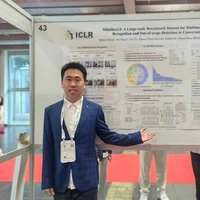
MIntRec2.0: A Large-scale Benchmark Dataset for Multimodal Intent Recognition and Out-of-scope Detection in Conversations
Multimodal intent recognition poses significant challenges, requiring the incorporation of non-verbal modalities from real-world contexts to enhance the comprehension of human intentions. Existing benchmark datasets are limited in scale and suffer from difficulties in handling out-of-scope samples that arise in multi-turn conversational interactions. We introduce MIntRec2.0, a large-scale benchmark dataset for multimodal intent recognition in multi-party conversations. It contains 1,245 dialogues with 15,040 samples, each annotated within a new intent taxonomy of 30 fine-grained classes. Besides 9,304 in-scope samples, it also includes 5,736 out-of-scope samples appearing in multi-turn contexts, which naturally occur in real-world scenarios. Furthermore, we provide comprehensive information on the speakers in each utterance, enriching its utility for multi-party conversational research. We establish a general framework supporting the organization of single-turn and multi-turn dialogue data, modality feature extraction, multimodal fusion, as well as in-scope classification and out-of-scope detection. Evaluation benchmarks are built using classic multimodal fusion methods, ChatGPT, and human evaluators. While existing methods incorporating nonverbal information yield improvements, effectively leveraging context information and detecting out-of-scope samples remains a substantial challenge. Notably, large language models exhibit a significant performance gap compared to humans, highlighting the limitations of machine learning methods in the cognitive intent understanding task. We believe that MIntRec2.0 will serve as a valuable resource, providing a pioneering foundation for research in human-machine conversational interactions, and significantly facilitating related applications. The full dataset and codes are available at https://github.com/thuiar/MIntRec2.0.
Enabling Chatbots with Eyes and Ears: An Immersive Multimodal Conversation System for Dynamic Interactions
As chatbots continue to evolve toward human-like, real-world, interactions, multimodality remains an active area of research and exploration. So far, efforts to integrate multimodality into chatbots have primarily focused on image-centric tasks, such as visual dialogue and image-based instructions, placing emphasis on the "eyes" of human perception while neglecting the "ears", namely auditory aspects. Moreover, these studies often center around static interactions that focus on discussing the modality rather than naturally incorporating it into the conversation, which limits the richness of simultaneous, dynamic engagement. Furthermore, while multimodality has been explored in multi-party and multi-session conversations, task-specific constraints have hindered its seamless integration into dynamic, natural conversations. To address these challenges, this study aims to equip chatbots with "eyes and ears" capable of more immersive interactions with humans. As part of this effort, we introduce a new multimodal conversation dataset, Multimodal Multi-Session Multi-Party Conversation (M^3C), and propose a novel multimodal conversation model featuring multimodal memory retrieval. Our model, trained on the M^3C, demonstrates the ability to seamlessly engage in long-term conversations with multiple speakers in complex, real-world-like settings, effectively processing visual and auditory inputs to understand and respond appropriately. Human evaluations highlight the model's strong performance in maintaining coherent and dynamic interactions, demonstrating its potential for advanced multimodal conversational agents.


MIRAGE: A Benchmark for Multimodal Information-Seeking and Reasoning in Agricultural Expert-Guided Conversations
We introduce MIRAGE, a new benchmark for multimodal expert-level reasoning and decision-making in consultative interaction settings. Designed for the agriculture domain, MIRAGE captures the full complexity of expert consultations by combining natural user queries, expert-authored responses, and image-based context, offering a high-fidelity benchmark for evaluating models on grounded reasoning, clarification strategies, and long-form generation in a real-world, knowledge-intensive domain. Grounded in over 35,000 real user-expert interactions and curated through a carefully designed multi-step pipeline, MIRAGE spans diverse crop health, pest diagnosis, and crop management scenarios. The benchmark includes more than 7,000 unique biological entities, covering plant species, pests, and diseases, making it one of the most taxonomically diverse benchmarks available for vision-language models, grounded in the real world. Unlike existing benchmarks that rely on well-specified user inputs and closed-set taxonomies, MIRAGE features underspecified, context-rich scenarios with open-world settings, requiring models to infer latent knowledge gaps, handle rare entities, and either proactively guide the interaction or respond. Project Page: https://mirage-benchmark.github.io

LLaSA: A Multimodal LLM for Human Activity Analysis Through Wearable and Smartphone Sensors
Wearables generate rich motion data, yet current systems only classify what happened - failing to support natural questions about why it happened or what it means. We introduce LLaSA (Large Language and Sensor Assistant), a compact 13B model that enables ask-anything, open-ended question answering grounded in raw IMU data. LLaSA supports conversational, context-aware reasoning - explaining the causes of sensor-detected behaviors and answering free-form questions in real-world scenarios. It is tuned for scientific accuracy, coherence, and response reliability. To advance this new task of sensor-based QA, we release three large-scale datasets: SensorCaps, OpenSQA, and Tune-OpenSQA. Together, these resources define a new benchmark for sensor-language models. LLaSA consistently produces interpretable, causal answers and outperforms commercial LLMs across both public and real-world settings. Our code repository and datasets can be found at https://github.com/BASHLab/LLaSA.

AgMMU: A Comprehensive Agricultural Multimodal Understanding and Reasoning Benchmark
We curate a dataset AgMMU for evaluating and developing vision-language models (VLMs) to produce factually accurate answers for knowledge-intensive expert domains. Our AgMMU concentrates on one of the most socially beneficial domains, agriculture, which requires connecting detailed visual observation with precise knowledge to diagnose, e.g., pest identification, management instructions, etc. As a core uniqueness of our dataset, all facts, questions, and answers are extracted from 116,231 conversations between real-world users and authorized agricultural experts. After a three-step dataset curation pipeline with GPT-4o, LLaMA models, and human verification, AgMMU features an evaluation set of 5,460 multiple-choice questions (MCQs) and open-ended questions (OEQs). We also provide a development set that contains 205,399 pieces of agricultural knowledge information, including disease identification, symptoms descriptions, management instructions, insect and pest identification, and species identification. As a multimodal factual dataset, it reveals that existing VLMs face significant challenges with questions requiring both detailed perception and factual knowledge. Moreover, open-source VLMs still demonstrate a substantial performance gap compared to proprietary ones. To advance knowledge-intensive VLMs, we conduct fine-tuning experiments using our development set, which improves LLaVA-1.5 evaluation accuracy by up to 3.1%. We hope that AgMMU can serve both as an evaluation benchmark dedicated to agriculture and a development suite for incorporating knowledge-intensive expertise into general-purpose VLMs.
BaseReward: A Strong Baseline for Multimodal Reward Model
The rapid advancement of Multimodal Large Language Models (MLLMs) has made aligning them with human preferences a critical challenge. Reward Models (RMs) are a core technology for achieving this goal, but a systematic guide for building state-of-the-art Multimodal Reward Models (MRMs) is currently lacking in both academia and industry. Through exhaustive experimental analysis, this paper aims to provide a clear ``recipe'' for constructing high-performance MRMs. We systematically investigate every crucial component in the MRM development pipeline, including reward modeling paradigms (e.g., Naive-RM, Critic-based RM, and Generative RM), reward head architecture, training strategies, data curation (covering over ten multimodal and text-only preference datasets), backbone model and model scale, and ensemble methods. Based on these experimental insights, we introduce BaseReward, a powerful and efficient baseline for multimodal reward modeling. BaseReward adopts a simple yet effective architecture, built upon a {Qwen2.5-VL} backbone, featuring an optimized two-layer reward head, and is trained on a carefully curated mixture of high-quality multimodal and text-only preference data. Our results show that BaseReward establishes a new SOTA on major benchmarks such as MM-RLHF-Reward Bench, VL-Reward Bench, and Multimodal Reward Bench, outperforming previous models. Furthermore, to validate its practical utility beyond static benchmarks, we integrate BaseReward into a real-world reinforcement learning pipeline, successfully enhancing an MLLM's performance across various perception, reasoning, and conversational tasks. This work not only delivers a top-tier MRM but, more importantly, provides the community with a clear, empirically-backed guide for developing robust reward models for the next generation of MLLMs.





MIDAS: Multimodal Interactive Digital-human Synthesis via Real-time Autoregressive Video Generation
Recently, interactive digital human video generation has attracted widespread attention and achieved remarkable progress. However, building such a practical system that can interact with diverse input signals in real time remains challenging to existing methods, which often struggle with high latency, heavy computational cost, and limited controllability. In this work, we introduce an autoregressive video generation framework that enables interactive multimodal control and low-latency extrapolation in a streaming manner. With minimal modifications to a standard large language model (LLM), our framework accepts multimodal condition encodings including audio, pose, and text, and outputs spatially and semantically coherent representations to guide the denoising process of a diffusion head. To support this, we construct a large-scale dialogue dataset of approximately 20,000 hours from multiple sources, providing rich conversational scenarios for training. We further introduce a deep compression autoencoder with up to 64times reduction ratio, which effectively alleviates the long-horizon inference burden of the autoregressive model. Extensive experiments on duplex conversation, multilingual human synthesis, and interactive world model highlight the advantages of our approach in low latency, high efficiency, and fine-grained multimodal controllability.